7 Types of Silk Fabric: How They Feel and Where They Work Best
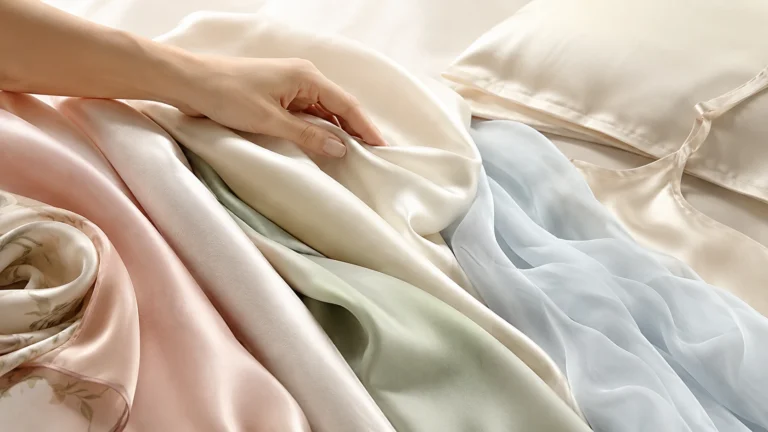
Silk is not a single fabric with one standard texture. Its appearance, softness, drape and printing performance can vary significantly depending on the weave, yarn structure, fabric weight and finishing process.
Understanding these differences is important when choosing silk for custom scarves, garments, ties, accessories or printed fabric collections. The right fabric should support both the visual effect of the design and the intended use of the finished product. Understanding these differences is important when choosing silk for custom scarves, garments, ties, accessories or printed fabric collections. The right fabric should support both the visual effect of the design and the intended use of the finished product.
What Determines the Feel of Silk?
Silk begins as a natural protein fibre produced by silkworms. After the cocoons are collected, the silk filaments are reeled, twisted, woven and finished to create different fabric structures.
Several factors influence the final hand feel:
- Weave structure: Determines whether the surface feels smooth, textured, crisp or softly creped.
- Fabric weight: Usually measured in momme. A higher momme generally indicates a denser and heavier silk fabric.
- Yarn twist: Highly twisted yarns can produce a more textured or slightly grainy surface.
- Finishing process: Washing, dyeing, printing and other treatments can change the softness, lustre and drape.
- Printing method: Digital printing may affect how colour appears on glossy, matte, lightweight or transparent silk.
Below are seven commonly used silk fabrics and the qualities that make each one suitable for different custom projects.
1. Silk Satin / Silk Charmeuse
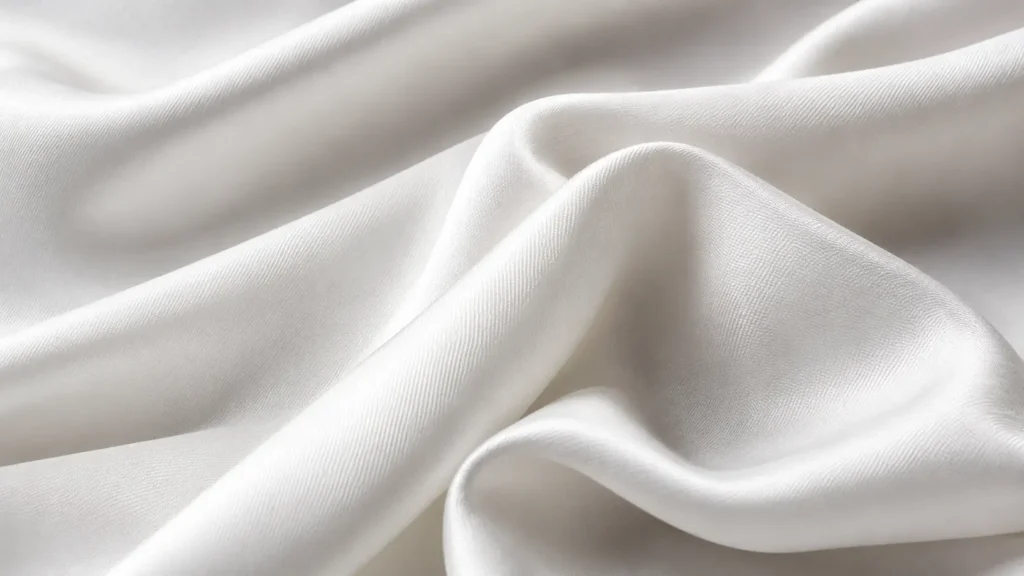
Silk satin is known for its smooth surface, elegant shine and fluid drape. The front usually has a glossy finish, while the reverse side appears softer and more matte.
Commonly selected weights range from lightweight options for scarves and accessories to heavier fabrics for dresses, blouses and premium garments.
Silk satin works especially well when a design requires:
- Rich and vibrant colours
- A luxurious glossy appearance
- Smooth movement and soft drape
- Detailed floral, photographic or artistic printing
Because its surface reflects light, colours may appear slightly different under natural and indoor lighting. Producing a printed sample before bulk production is therefore recommended.
Suitable for: silk scarves, dresses, blouses, eye masks, pillowcases, scrunchies and luxury accessories.
2. Silk Twill
Silk twill has a subtle diagonal weave that gives the fabric more structure and durability than many lightweight silk fabrics. Its surface offers a refined balance between softness and body, making it one of the most popular choices for premium printed scarves.
The firm weave helps patterns, borders and fine lines remain clear. It is particularly suitable for designs that require precise colour separation or detailed illustration.
Lighter twill feels soft and flexible, while heavier twill provides a fuller hand feel and more defined shape.
Suitable for: square scarves, neck scarves, silk ties, pocket squares, fashion accessories and structured printed designs.
3. Silk Crepe de Chine
Silk crepe de Chine has a soft, slightly textured surface created with twisted yarns. Compared with satin, it has less shine and a more understated appearance.
The fabric is lightweight, breathable and resistant to obvious creasing. Its gentle drape makes it comfortable for both accessories and garments.
Printed colours on crepe de Chine usually appear refined and natural rather than highly glossy. This makes it suitable for soft botanical artwork, watercolour patterns and designs that benefit from a low-lustre finish.
Suitable for: scarves, blouses, dresses, skirts, shawls and lightweight fashion collections.
4. Silk Chiffon
Silk chiffon is extremely lightweight, sheer and airy. It has a delicate texture and moves easily, creating an elegant floating effect.
Because the fabric is transparent, printed colours often appear lighter and softer than they would on satin or twill. The final result may also be influenced by the background colour and the way the fabric is layered.
Designs with soft gradients, loose floral patterns and light colour palettes are usually more suitable than artwork requiring heavy colour coverage.
Careful cutting and edge finishing are important because chiffon is delicate and may shift during production.
Suitable for: lightweight scarves, overlays, eveningwear, bridal accessories and decorative fashion elements.
5. Silk Habotai
Silk habotai is a lightweight plain-weave fabric with a smooth surface and soft lustre. Both sides have a relatively similar appearance, although the printed side normally remains more vivid.
It is lighter and less structured than twill, making it a practical option for soft scarves, linings and projects that require flexibility.
Habotai can reproduce bright colours and flowing patterns effectively. However, very lightweight versions may appear more transparent, so the design and intended use should be considered before production.
Suitable for: lightweight scarves, garment linings, decorative textiles, accessories and promotional silk products.
6. Silk Georgette
Silk georgette has a fine, grainy texture and a slightly dry hand feel. It is semi-transparent but generally has more body and surface texture than chiffon.
The fabric drapes naturally while maintaining a soft, slightly springy structure. Its matte appearance makes it suitable for designs that require depth without a strong reflective shine.
Printed patterns on georgette often appear soft and artistic. Fine details can still be achieved, but the textured surface gives the finished design a different character from smooth satin or twill.
Suitable for: scarves, dresses, blouses, headwear, layered garments and flowing fashion pieces.
7. Stretch Silk Satin
Stretch silk satin combines the smooth shine of satin with added flexibility. It usually contains a small percentage of elastic fibre, allowing the fabric to stretch and recover more easily than pure silk satin.
Its soft drape and flexibility make it suitable for garments that need to follow the shape of the body. However, the stretch must be considered during printing, cutting and sewing to prevent distortion.
It is generally more appropriate for fitted clothing and loungewear than for traditional structured square scarves.
Suitable for: dresses, fitted blouses, sleepwear, robes, skirts and flexible fashion garments.
How to Choose the Right Silk for Your Project
The best silk fabric depends on the desired appearance, product type and printing requirements.
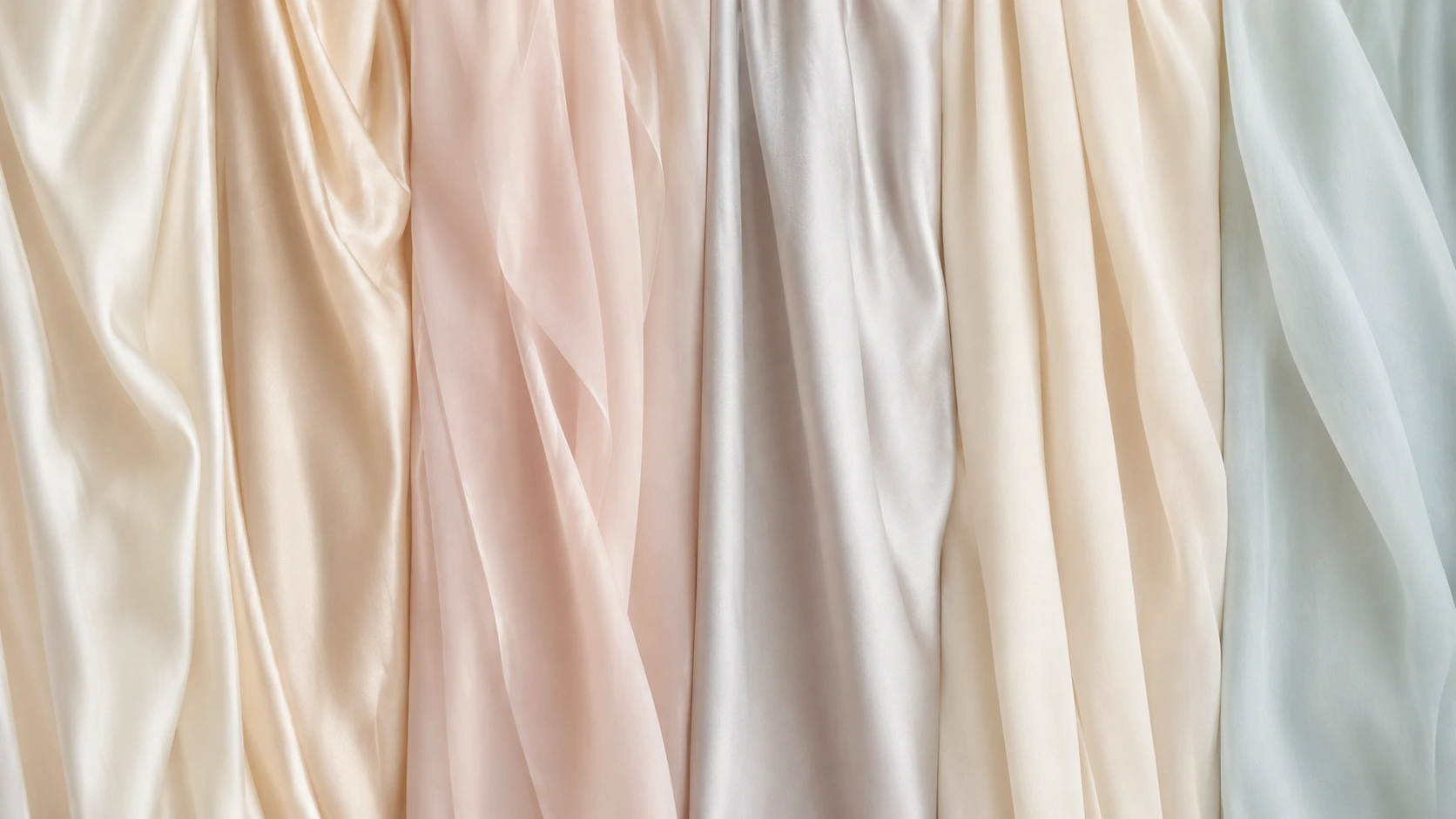
Choose silk satin when you want rich colour and an elegant glossy finish. Select silk twill for detailed printing, structure and premium scarves. Use crepe de Chine for a softer, low-lustre appearance, or choose chiffon and georgette when the design requires transparency and light movement. Habotai offers a lightweight and versatile option, while stretch satin is better suited to fitted garments.
Fabric weight is equally important. A lightweight silk creates an airy and delicate result, while a heavier silk provides more structure, opacity and durability.
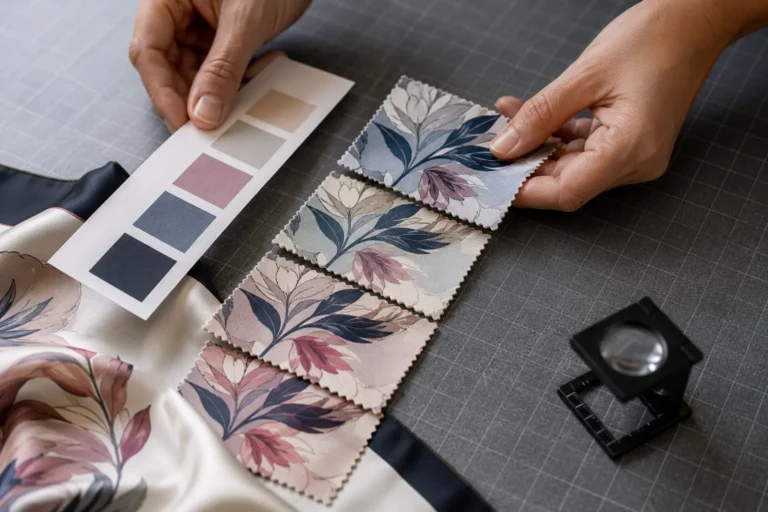
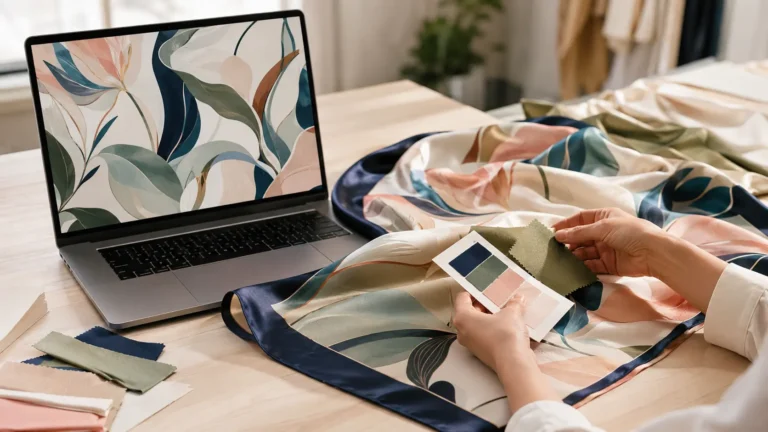
Before confirming bulk production, it is advisable to evaluate fabric swatches and produce a strike-off using the actual artwork. A physical sample provides a more reliable understanding of colour, texture, lustre and drape than a computer screen alone.
Choosing the right silk is the first step toward transforming an original design into a refined finished product. By considering the fabric structure, weight, printing performance and end use together, designers and brands can achieve a result that is both visually attractive and practical.