Why Small-Batch Digital Silk Printing Is Ideal for Independent Designers
For an independent designer, launching a silk collection involves more than creating beautiful artwork. It also requires decisions about budget, minimum order quantities, uncertain demand and the risk of holding too much stock.
Large-scale production can work well for established products with predictable sales. For a new label, however, committing to a high quantity before receiving customer feedback can create unnecessary financial pressure.
Small-batch digital silk printing offers a more flexible route. It allows designers to turn original artwork into finished products in manageable quantities, test the market and develop a collection gradually.
What Is Small-Batch Digital Printing?
Small-batch production means manufacturing a limited quantity of one design or several carefully selected designs rather than ordering a large volume at once. The exact quantity varies according to the manufacturer, fabric, scarf size and finishing requirements.
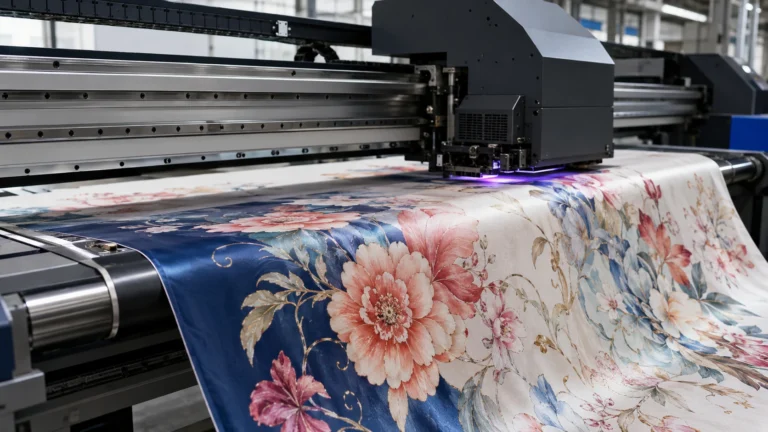
Digital printing is well suited to this model because the artwork is printed directly from a digital file. Unlike traditional screen printing, it does not require a separate physical screen for every colour.
This makes it practical to reproduce detailed, multicoloured artwork in lower quantities, particularly when a collection contains several designs or colourways.
Lower Financial and Inventory Risk
One of the greatest challenges for an emerging label is deciding how much to produce before knowing how customers will respond.
A large order may reduce the price per piece, but it also ties up more money in inventory. If a design or colour does not sell as expected, the remaining products can occupy storage space and reduce the budget available for future development.
Small-batch production lowers the total initial commitment. Designers can distribute their budget across sampling, photography, packaging and marketing instead of investing most of it in stock.
This does not mean that a small order always has the lowest unit price. The cost per scarf is usually higher than in mass production. Its advantage is the lower overall exposure and the freedom to make future decisions based on real demand.
Test the Market with a Real Product
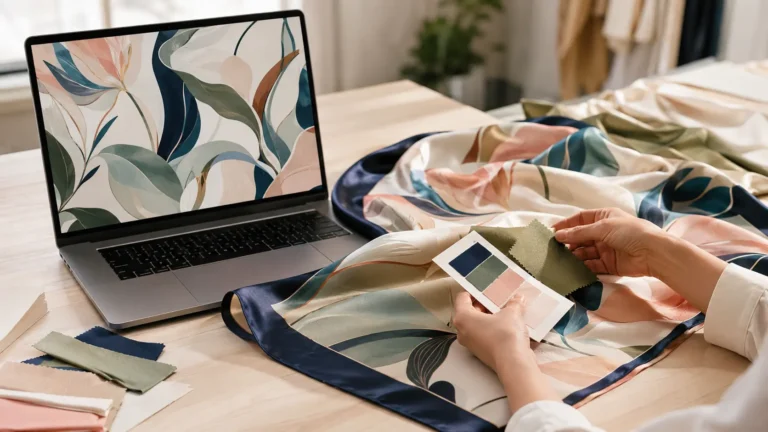
A digital mock-up cannot fully represent the colour, texture, lustre, drape or hand feel of printed silk.
A small production run allows designers to present the actual product through an online shop, design market, limited release or selected retail partners. Customer response can reveal:
✨ Which designs attract the most interest
✨ Which colours and sizes are preferred
✨ Whether customers accept the intended price
✨ How the scarf performs when photographed, displayed and worn
This information is more useful than making a large production decision based only on personal preference or online engagement.
Offer More Designs Without Excess Stock
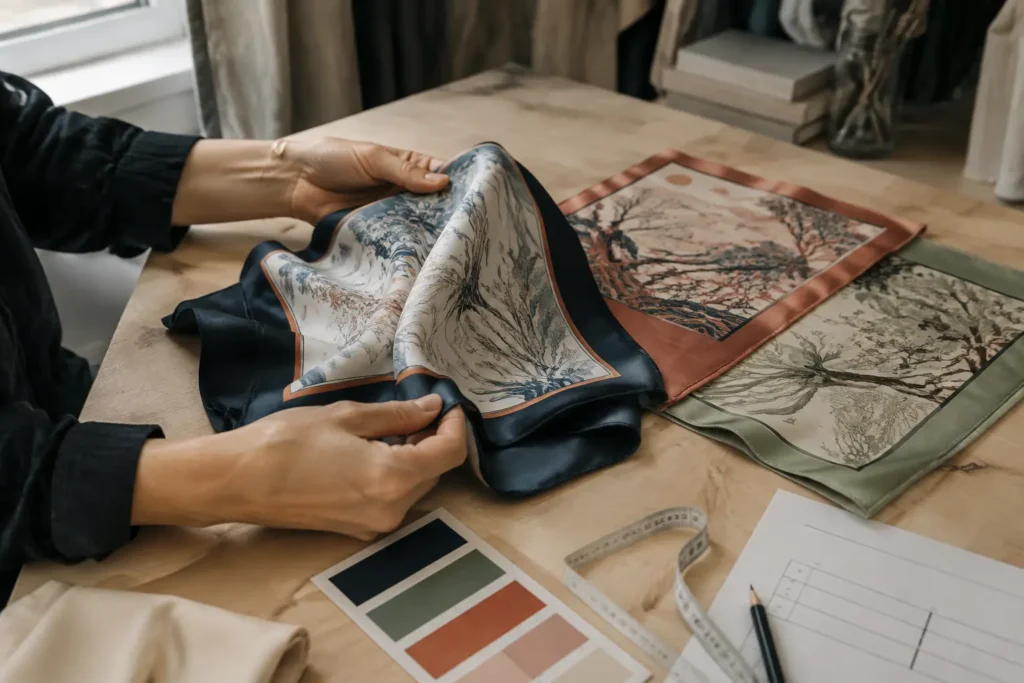
Independent designers often build their identity through originality and variety. A collection may contain several artworks, seasonal colours or products created for different audiences.
If every design requires a high minimum quantity, this variety can quickly create a large inventory. Small-batch printing allows the production plan to be divided across several designs.
A designer can introduce a compact collection, observe which pieces perform best and reorder the strongest designs later. This supports creative variety without turning every new idea into a major stock commitment.
More Creative Freedom
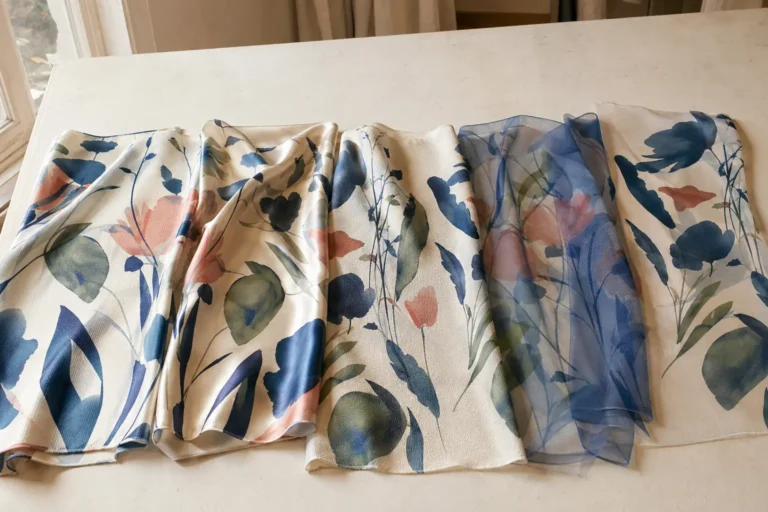
Digital silk printing can reproduce many colours, fine lines, gradients, painterly effects and complex details. It is especially suitable for illustrators, artists and textile designers whose work may lose its character if simplified into a limited number of colours.
Designers can explore:
✨ Alternative colourways
✨ Detailed illustrations and photographic elements
✨ Watercolour-style transitions and soft gradients
✨ Placement designs created for a specific scarf size
✨ Seasonal or artist-collaboration collections
The artwork must still be prepared professionally. Resolution, colour profile, dimensions and print placement should all be checked before production.
Improve the Collection Between Runs
A first production run often reveals details that are difficult to predict on screen.
A border may need more space for hemming. A dark colour may require adjustment on the chosen silk. Customers may prefer another scarf size, or the packaging may need to be more practical for shipping.
Producing in smaller quantities gives designers an opportunity to learn from these details and improve the next run. Artwork, fabric, dimensions or finishing can be adjusted before more stock is produced.
Approved production specifications should still be recorded carefully. Changing the silk type, momme weight, artwork or finishing method can affect the final colour and appearance, so a revised sample may be necessary.
Support Limited Editions and Niche Ideas
Independent brands do not always need to appeal to a mass market. Their strength often comes from speaking clearly to a smaller, well-defined audience.
Small-batch production works well for limited editions, artist collaborations, museum products, cultural projects and seasonal collections. It also allows designers to develop niche concepts that would not justify mass production.
In these cases, the limited quantity can become part of the product story rather than simply a production restriction.
Does Small Batch Mean Lower Quality?
Order quantity and product quality are separate questions.
A small collection can use the same carefully selected silk, printing process, colour review and finishing standards as a larger order. Quality depends on the fabric, artwork preparation, colour fixation, washing, hemming and inspection—not simply on the number of pieces produced.
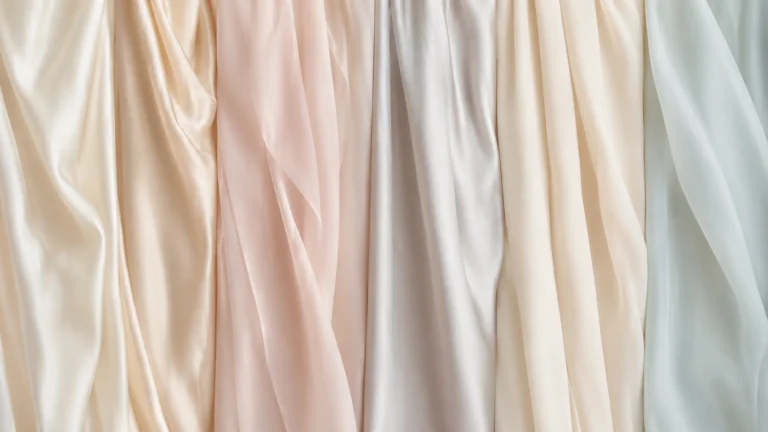
Sampling remains essential. Before production, the designer should review the actual colour, scale, detail, texture and reverse-side appearance on the selected silk.
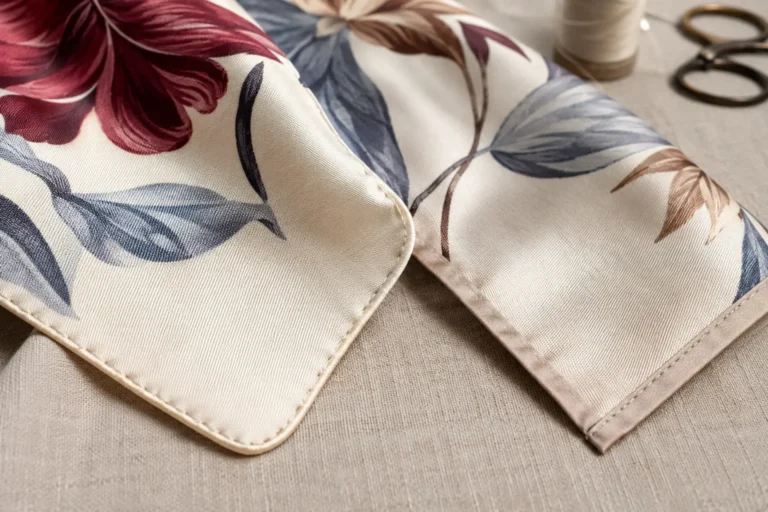
Finishing should also match the product positioning. A hand-rolled hem may support a premium limited edition, while a precise machine-stitched hem may provide a more efficient solution for another collection.
What Should Designers Prepare?
A clear project brief helps sampling and production proceed more efficiently. Before requesting a quotation, prepare:
✨ Final or near-final high-resolution artwork
✨ Intended scarf dimensions
✨ Preferred silk type and momme weight, if known
✨ Estimated quantity for each design or colourway
✨ Preferred hemming and packaging options
✨ Target delivery date
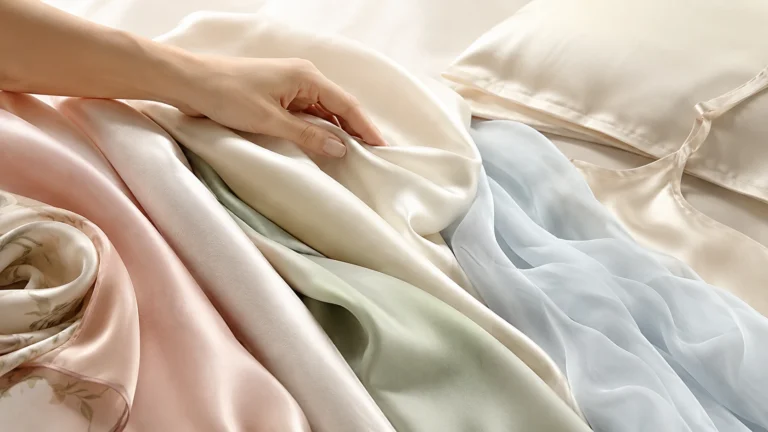
If the fabric has not been selected, explain how the scarf should look and feel. Details such as structured or fluid drape, strong or subtle lustre, opacity and reverse-side colour visibility can help the production team recommend suitable options.
Start Small and Grow Deliberately
Small-batch digital silk printing gives independent designers a practical bridge between an idea and a sellable collection. It lowers the total initial commitment, supports creative variety and allows products to be tested before larger quantities are considered.
Its real value is not simply ordering fewer pieces. It allows a designer to follow a more controlled process: create, sample, produce, learn, improve and reorder.
If you are developing a custom silk scarf or limited-edition collection, send us your artwork, preferred dimensions, estimated quantity and product ideas. The China Silk Scarf team can help you review suitable fabrics, printing options and finishing methods before production.