Hand-Rolled Hem vs Machine-Stitched Hem: What Is the Difference?
The edge of a silk scarf may look like a small detail, but it has a noticeable influence on the finished product. It affects how the scarf feels in the hand, how the corners sit, how the fabric drapes and how the product is positioned in the market.
Two of the most common finishing options are a hand-rolled hem and a machine-stitched hem. Both can produce a neat and durable scarf, but they create different visual effects and suit different types of projects.
Understanding these differences helps designers choose a finish that matches the fabric, design, quantity, budget and intended customer experience.
What Is a Hand-Rolled Hem?
A hand-rolled hem is created by carefully rolling the raw edge of the silk into a narrow rounded shape and securing it with small stitches sewn by hand. The edge is gradually formed by the craftsperson rather than passed through an automated hemming process.
Because the work is completed by hand, the finished edge has a softly rounded, slightly dimensional appearance. The stitches are usually discreet, while the roll itself remains visible as part of the scarf’s character.
Typical features of a hand-rolled hem include:
✨ A soft, rounded edge with a subtle three-dimensional profile
✨ Small individual stitches rather than a continuous machine stitch line
✨ Corners shaped and finished by hand
✨ Slight natural variations that reflect the handmade process
✨ More time and skilled labour required for each scarf
Hand rolling is often associated with premium silk scarves, limited collections, designer pieces and products where craftsmanship forms part of the brand story.
What Is a Machine-Stitched Hem?
A machine-stitched hem is formed and secured using sewing equipment. Depending on the fabric and product specification, it may be a narrow folded hem, a machine-rolled hem or another clean edge finish.
The term “machine hem” does not describe only one appearance. A fine machine-rolled edge on silk chiffon, for example, may look different from a narrow folded hem on silk twill. The suitable method depends on the fabric weight, transparency, size and intended use.
Typical features of a machine-stitched hem include:
✨ A straight, regular and highly consistent stitch line
✨ A flatter and more uniform edge profile
✨ Consistent dimensions across larger production quantities
✨ Faster production and a lower labour cost than hand rolling
✨ Suitability for both small commercial runs and higher-volume orders
A well-made machine hem should not look rough or unfinished. With the correct equipment, thread, tension and operator control, it can provide a refined result that suits many fashion and accessory products.
The Main Visual Difference
The clearest difference is the shape of the edge.
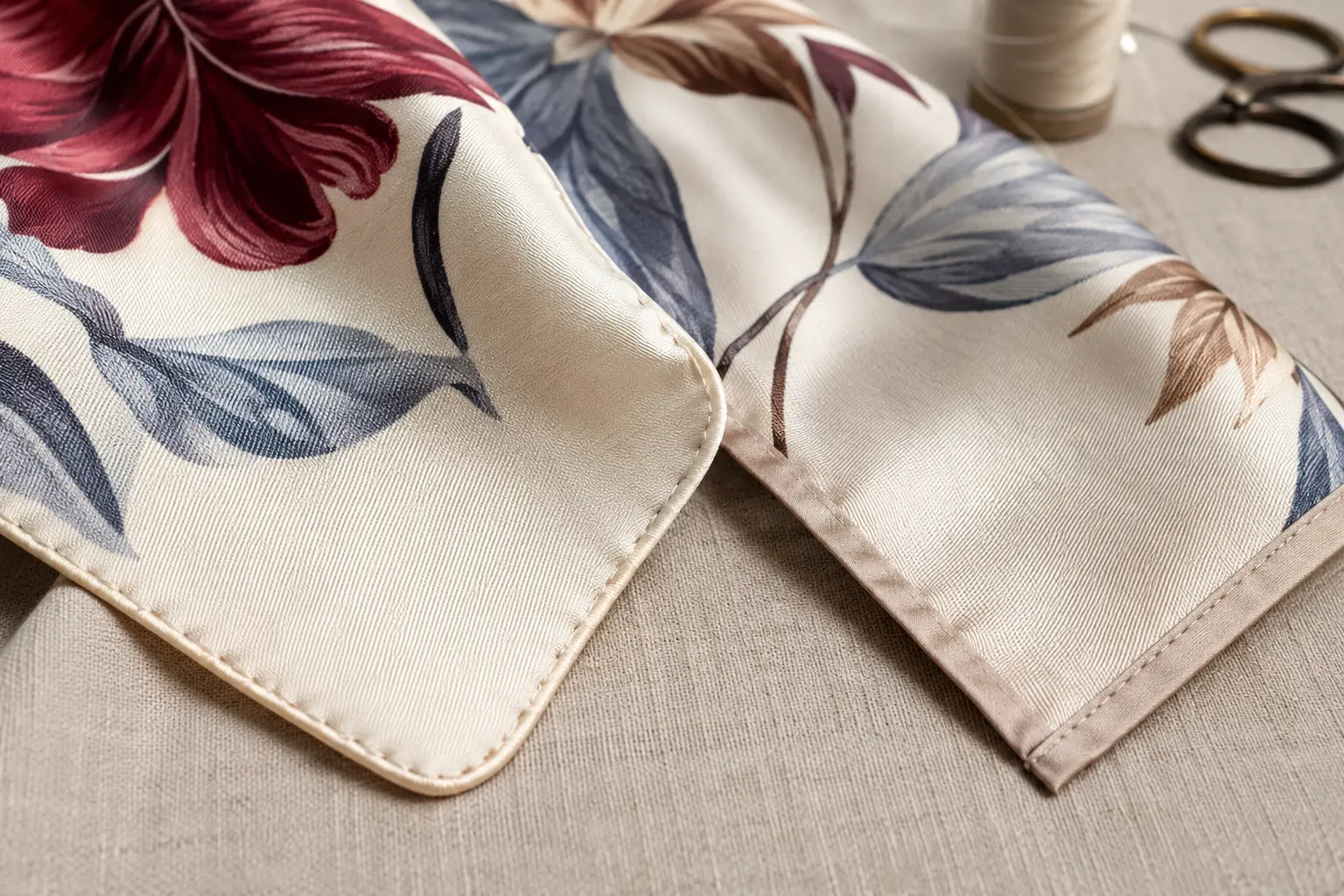
A hand-rolled hem normally feels soft and rounded. It adds a small amount of volume around the scarf and gives the edge an artisanal character. When viewed closely, the individual stitches and slight variations reveal that the scarf was finished by hand.
A machine-stitched hem is usually flatter and more regular. The stitch spacing remains highly consistent, and the corners often appear more geometrically uniform. This creates a clean, controlled look that can work particularly well for modern, minimal or commercially scaled collections.
Neither appearance is automatically better. A softly rounded handmade edge may complement a classic luxury scarf, while a precise flat edge may suit a contemporary design with sharp lines and a streamlined finish.
How the Hem Affects Drape and Feel
Silk is valued for its movement, and the edge finish can influence how that movement is perceived.
A hand-rolled hem preserves a soft, flexible feel along the edge. The rounded construction can give a square scarf a slightly fuller outline when it is folded or tied. On high-quality silk twill or satin, this detail can contribute to a substantial and luxurious hand feel.
A machine hem can feel flatter and slightly firmer, depending on the number of fabric folds, stitch density and thread tension. On lightweight silk, a correctly adjusted machine finish can remain delicate and fluid. If the tension is too tight, however, the edge may pucker or become wavy.
For this reason, the quality of execution matters as much as the name of the technique.
Which Fabrics Work Best with Each Finish?
The fabric should be considered before the hemming method is confirmed.
Hand-rolled hems are commonly selected for silk twill, satin and other scarf fabrics that can form a neat, rounded edge. They are especially suitable when the hem is intended to be a visible design feature.
Very light or transparent fabrics, such as chiffon, may require a particularly narrow and controlled finish. A fine machine-rolled or baby hem is often a practical choice because it can create an even edge without adding too much bulk. The final recommendation still depends on the exact fabric quality, weight and product dimensions.
The same hem should not be applied to every silk in exactly the same way. Before production, a sample can confirm whether the selected method causes stretching, puckering, excessive thickness or a change in drape.
Time, Cost and Production Quantity
Hand rolling requires skilled work on every side and corner of every scarf. Production therefore takes longer, and the labour cost is higher. The difference becomes more significant as the scarf size and order quantity increase.
Machine stitching is faster and makes it easier to maintain consistent measurements across a larger order. It is often selected for collections with tighter target prices, shorter delivery schedules or higher quantities.
When planning a product, designers should consider:
✨ The target retail price and overall product positioning
✨ The quantity required for the first and future orders
✨ The available production time
✨ Whether handmade finishing is important to the brand story
✨ Whether exact uniformity or artisanal variation is preferred
For a limited-edition luxury scarf, the added cost of hand rolling may support the value of the product. For a contemporary accessory line, promotional scarf or larger commercial order, a precise machine finish may offer a better balance of quality, consistency and price.
Is a Hand-Rolled Hem Always Better?
Not necessarily.
Hand rolling is more labour-intensive and has a strong association with traditional luxury craftsmanship. However, that does not mean it is automatically the best choice for every design, fabric or market.
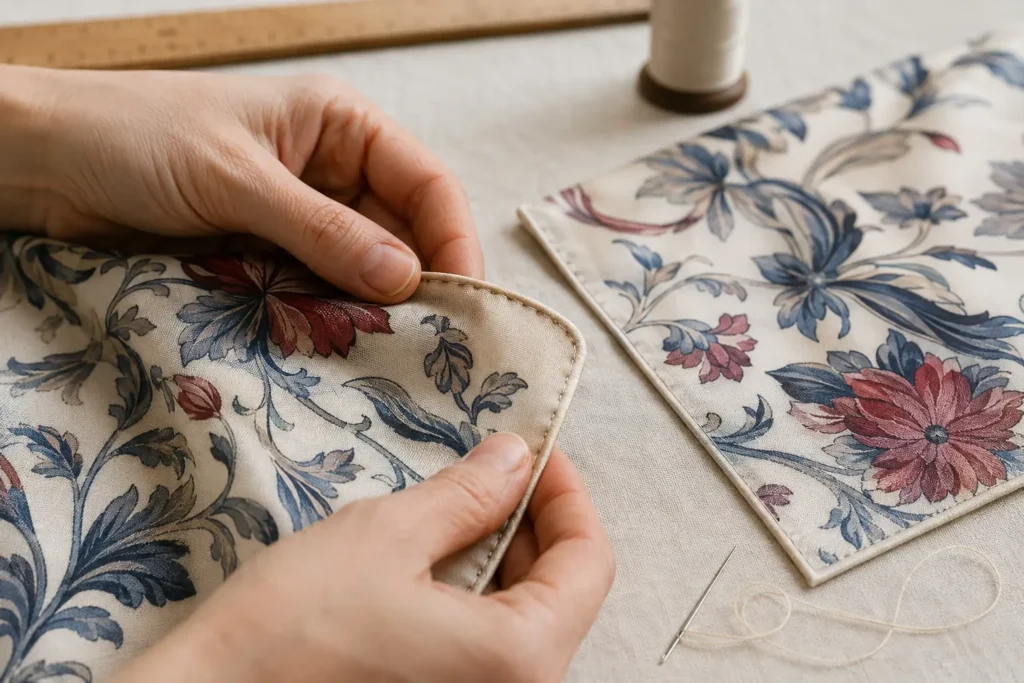
A poor hand-rolled hem may have uneven width, loose stitches, bulky corners or inconsistent tension. A high-quality machine hem can be clean, secure and beautifully suited to the design.
The right comparison is therefore not simply “handmade versus machine-made”. It is whether the chosen finish is executed well and supports the intended product.
What Should Designers Check on a Sample?
The hem should be evaluated together with the complete printed scarf, not as an isolated detail.
When reviewing a sample, check:
✨ Whether the hem width is visually balanced on all four sides
✨ Whether the corners are neat and free from excess bulk
✨ Whether the stitches are secure, regular and appropriate for the silk
✨ Whether the thread colour complements the border and artwork
✨ Whether the edge lies naturally without puckering or twisting
✨ Whether important motifs, text or border elements remain clear after hemming
Thread colour can be matched closely to the border or deliberately selected as a contrasting detail. This decision should be confirmed during sampling, particularly when the artwork contains several colours near the edge.
Allow for the Hem in the Artwork
Hemming uses a small area around the perimeter of the fabric. Designers should therefore include suitable edge allowance when preparing the artwork.
Important logos, lettering, fine borders and essential parts of a motif should not be positioned too close to the cut line. Small differences in cutting, folding and rolling may otherwise make the border appear uneven or hide part of the design.
For designs with a precise geometric frame, the print placement and finished scarf size should be discussed before sampling. A clear production template helps ensure that the visible border remains balanced after the edge is completed.
How to Choose the Right Hem for Your Silk Scarf
A hand-rolled hem may be the right choice when:
✨ The scarf is positioned as a premium or limited-edition product
✨ Traditional craftsmanship is part of the design concept
✨ A soft, rounded and visibly handmade edge is preferred
✨ The budget and schedule allow for additional manual work
A machine-stitched hem may be more suitable when:
✨ Clean uniformity is a priority
✨ The collection requires larger quantities or shorter lead times
✨ The target price requires a more efficient finishing method
✨ A lightweight fabric needs a very narrow, controlled edge
✨ The design calls for a flatter, more contemporary appearance
The decision should be based on the complete product rather than on one finishing term alone.
The Small Detail That Completes the Scarf
The hem frames the printed design and is one of the final details a customer sees and touches. Hand rolling brings softness, individuality and a traditional artisanal quality. Machine stitching offers precision, consistency and production efficiency.
Both methods can create a high-quality result when they are matched to the right silk and completed with careful workmanship.
If you are developing a custom silk scarf collection, share your artwork, preferred fabric, dimensions, quantity and target positioning with us. The China Silk Scarf team can help you compare suitable hemming options and confirm the finish through sampling before bulk production.