How to Style a Silk Scarf for Fall 2026: Five Ways to Wear It Beyond the Neck
A silk scarf can do much more than sit around the neck. For fall 2026, it can be tied at the waist, layered over a jacket, or used to add color to a handbag or hairstyle. These styling options give a familiar accessory a more personal role in an outfit.
For designers and brands, the different ways a scarf is worn also create new possibilities for custom collections. The artwork may look balanced when spread out, but knots, folds and layers change which parts of the design people see. Planning for those details can help a scarf work as both a printed piece of fabric and a wearable accessory.
Here are five styling ideas to explore, along with design details to consider when developing a custom silk scarf.
1. Tie a Long Scarf at the Waist
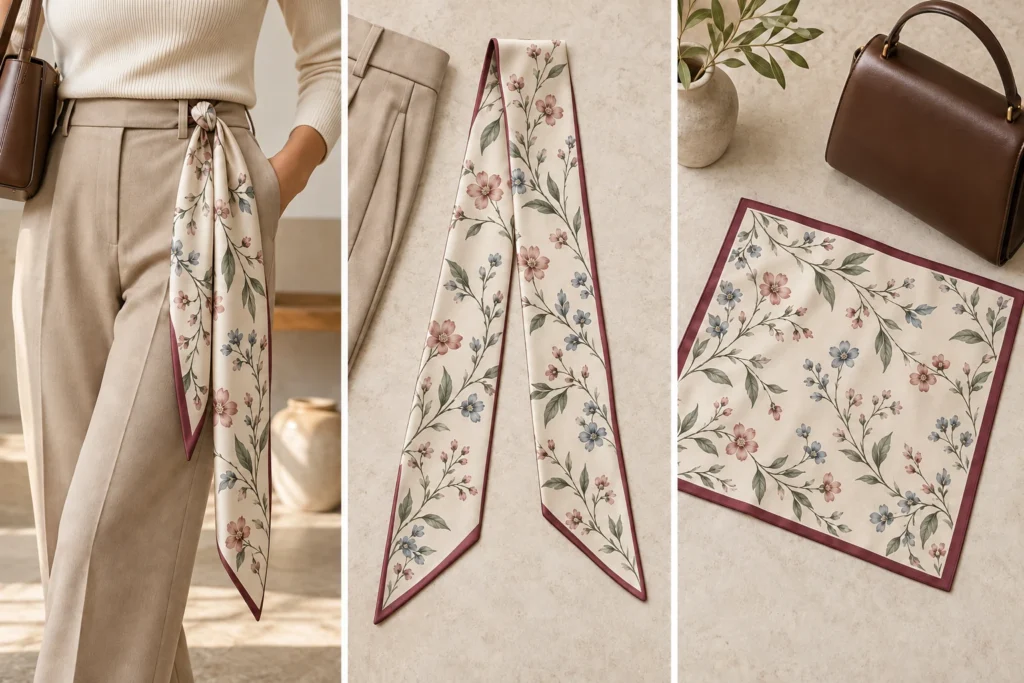
A long scarf can be knotted at the waist over trousers, a skirt or a simple dress. It adds color without the structure of a traditional belt, and the hanging ends create movement as the wearer walks.
The proportions affect the overall look. A shorter scarf can make a neat, compact knot, while a longer one can leave more fabric hanging at the side. The width also matters: a narrow scarf creates a subtle accent, while a wider style makes the print more visible.
When preparing artwork for this format, consider where the scarf will be tied. The knot may cover part of the design, so a single central motif could disappear once worn. Placing visual interest along the length or near the ends can help the pattern remain visible. Before confirming the layout, fold or tie a sample to see which sections show.
2. Drape a Square Scarf Over a Jacket
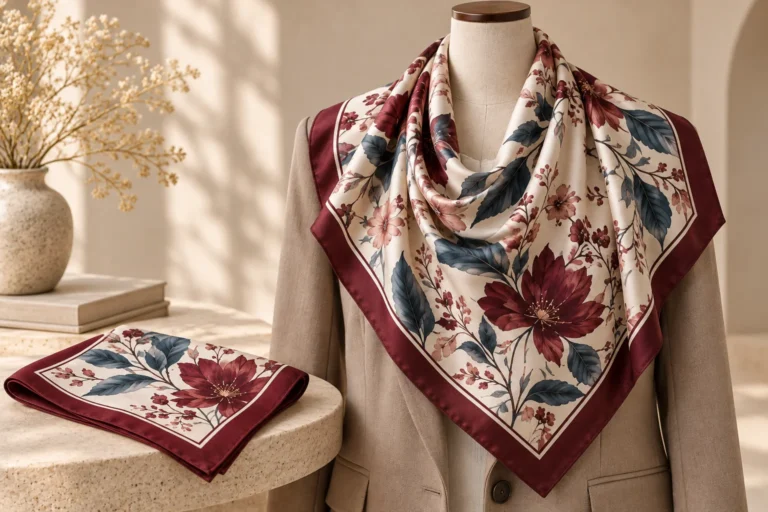
A large square scarf can be draped over a blazer, coat or lightweight jacket. It can soften the lines of tailored clothing, add color to a neutral outfit and create the impression of an extra layer without adding much weight.
There are several ways to wear it: folded diagonally over the shoulders, loosely placed across the front, or tucked under a jacket lapel. Each arrangement reveals a different part of the artwork. A wide border may frame the outfit, while a central motif may appear only when the scarf is worn open.
For a custom design, check how the composition works in both views: spread flat and draped over clothing. A print with a clear relationship between its center, corners and border can feel intentional in more than one arrangement. The selected silk also affects the result, since different fabrics can drape and reflect light differently.
3. Add a Scarf to a Handbag
A small square or narrow scarf can be tied around a handbag handle, knotted near the base of the handle or wrapped around it. This gives the bag a personal touch and can introduce a print in a small, easy-to-change detail.
Because only part of the scarf is visible, it helps to choose a design that remains attractive in a small area. A clear motif, contrasting border or coordinated color combination may read more easily than a pattern made up entirely of tiny details.
The finished edges are especially visible in this styling. Hand-rolled edges can create a delicate outline, while other finishing choices may give the scarf a different appearance. If the design includes a logo or signature, consider its position carefully: it could be hidden inside the knot or turned toward the bag.
4. Wear a Small Square as a Headscarf
A small silk square can be folded into a triangle and tied over the hair, or folded into a band and worn across the head. It can bring a print into an outfit while keeping the overall look simple.
The main design challenge is that folding changes the visible shape. The center may be hidden inside the fold, while the corners and border become more prominent. A composition that looks centered when the scarf is laid flat may not look centered when worn.
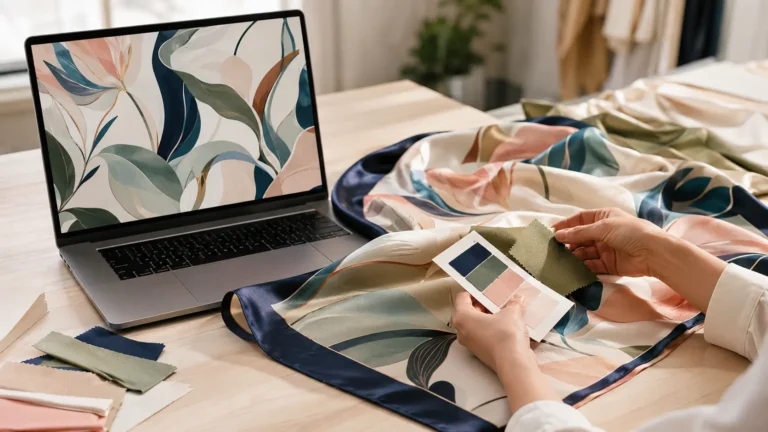
When adapting artwork for a headscarf, consider how it will appear in a few common folds. Check whether the border remains even, whether the key motifs are visible and whether the colors work where layers overlap. A physical sample makes it easier to test these details than viewing the artwork only on a screen.
5. Use a Large Scarf as a Light Layer
A generously sized scarf can be draped over the shoulders or worn across an outfit as a light layer. It can add warmth indoors or during milder weather while letting the artwork take a larger role in the outfit.
The way the fabric falls can change the print. A broad motif may be partly hidden in a fold, while a repeating pattern can remain visible across more of the scarf. The fabric’s weight and softness also influence how it sits on the shoulders and how much movement it has.
For a custom project, review the scarf at its finished size and in the intended fabric. Look at the print from a distance as well as up close: small details may be easy to see on a screen but less noticeable when the scarf is worn. A sample can help assess the color, hand feel and drape together.
6. Choose the Print for the Styling Purpose
The same artwork can create different impressions depending on how the scarf is worn. A small, high-contrast pattern may be easy to notice when tied to a handbag. A larger composition can make more impact when draped over a jacket. A border-focused design may work especially well when the scarf is folded into a headscarf.
Before developing a print, it helps to ask a few practical questions:
- Will the scarf be tied, folded, wrapped or draped?
- Which areas of the artwork should remain visible?
- Does the design need to work on more than one scarf size?
- Will a border, corner motif or logo be visible after styling?
- Does the artwork suit the fabric and finishing method?
These questions can guide the artwork layout before sampling and make it easier to decide what to review on the finished piece.
Review the Scarf Both Flat and Styled
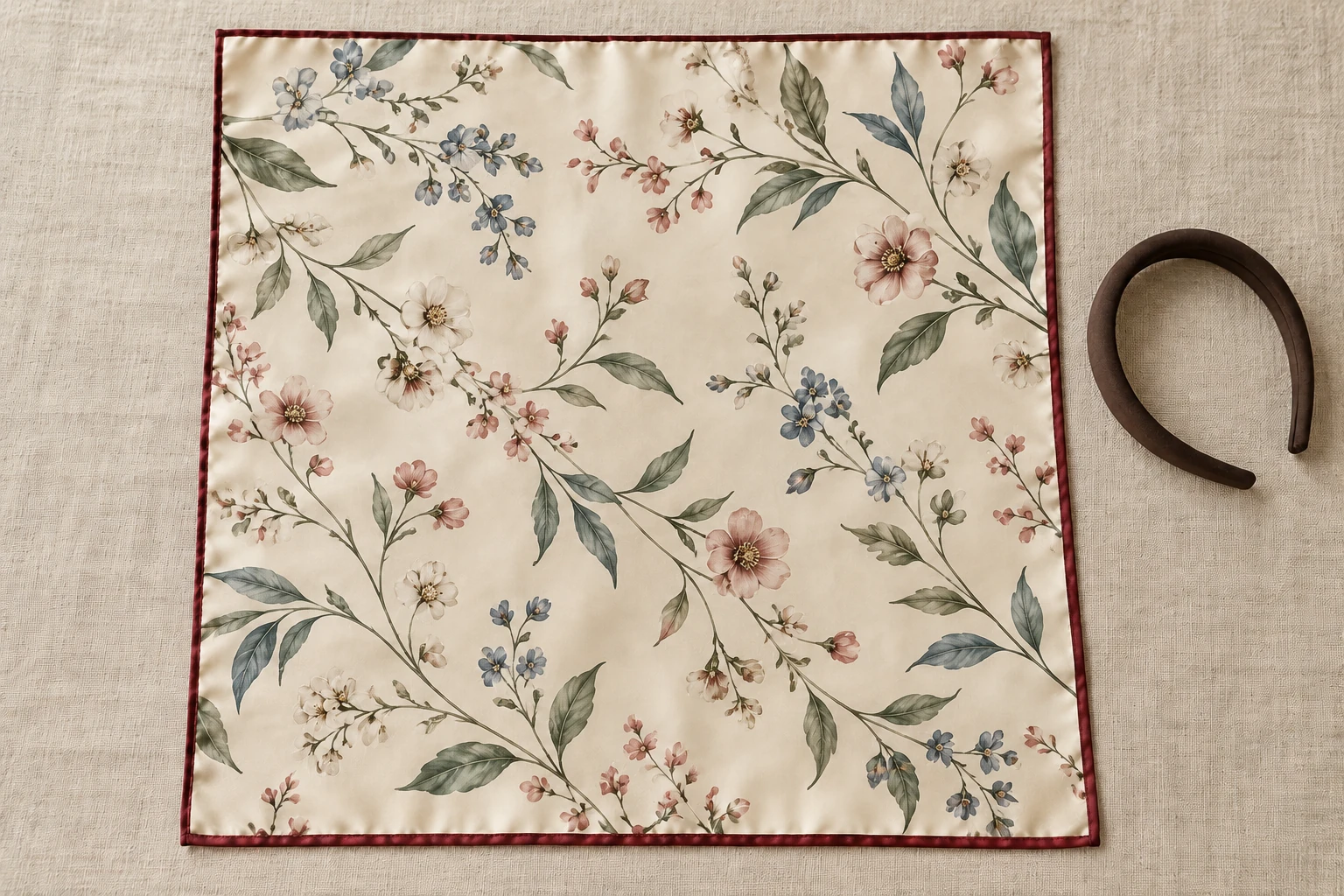
A flat photograph shows the complete artwork, but it does not show how the scarf behaves when worn. Tying, folding and draping can change the position of motifs, the visibility of the border and the way the fabric falls.
For a more useful sample review, examine the scarf in several ways:
- Lay it flat and check the full composition.
- Fold or tie it in the intended style.
- Check which motifs remain visible and where the edges sit.
- Look at the colors in natural light.
- Assess the fabric’s feel and drape on the body or over clothing.
This makes it easier to decide whether the sample matches the intended use and whether any adjustments are needed to the artwork, size or finishing.
Create a Collection with More Ways to Wear It
A custom silk scarf can be designed around a particular styling idea, or a collection can include different sizes for different uses. A small square might work as a headscarf or handbag accent, while a larger scarf can be draped over outerwear. A long format may suit styling at the waist.
The strongest collections consider these uses early in the design process. Artwork placement, scarf dimensions, fabric and finishing all contribute to the final look. Sampling helps bring those decisions together and shows how the scarf works beyond a digital mockup.
At Apexplor Tex, custom silk scarf projects can start from one piece. Share your artwork, preferred size and intended styling to discuss the project details and sampling options.