One Print, Three Silk Scarf Styles: Building a Versatile Custom Collection
A distinctive print does not have to live on just one scarf. For an independent designer or fashion brand, adapting the same artwork into several shapes can create a collection with a clear visual identity while giving customers different ways to wear it.
A narrow scarf, a small square and a large square may share the same colors and motifs, but they should not simply use the same artwork at three different scales. Each shape reveals a different part of the design when it is folded, tied or draped. Planning for those differences helps every piece feel intentional.
Start With a Print That Has Room to Adapt
Before choosing sizes, look at the artwork itself. Does it have a central motif, a border, an all-over repeat or a combination of these elements? Which details must remain recognizable after the scarf is folded?
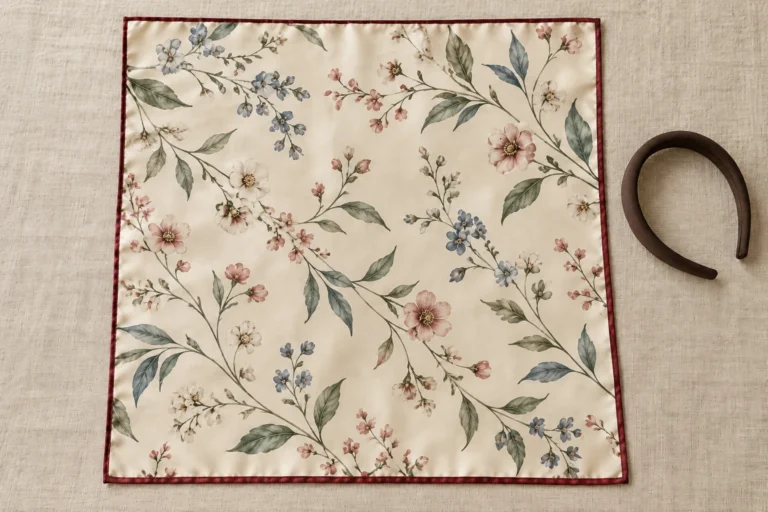
A print with several visual elements often offers more flexibility than one that depends entirely on a single central image. A floral illustration, for example, might become a flowing repeat on a narrow scarf, a balanced corner design on a small square and a fuller composition on a large square.
Keeping the same color palette across all three pieces ties the collection together, even when the layouts change.
1. The Narrow Scarf: Design for the Visible Strip
A narrow silk scarf can be tied at the neck, worn in the hair or wrapped around a bag handle. In each case, only part of its surface is visible.
For this shape, place the strongest colors and recognizable details where they will show after tying. Large motifs may be cut off by the narrow width, while very fine details can disappear from a distance. A thoughtfully arranged repeat, a clear border or contrasting ends can work particularly well.
When reviewing the design proof, do more than look at the scarf laid flat. Fold or mock up the artwork at its intended width and check what a customer will actually see.
2. The Small Square: Make Every Fold Count
A small square offers a compact way to introduce a print. It can be worn around the neck, tied in the hair or added to a handbag.
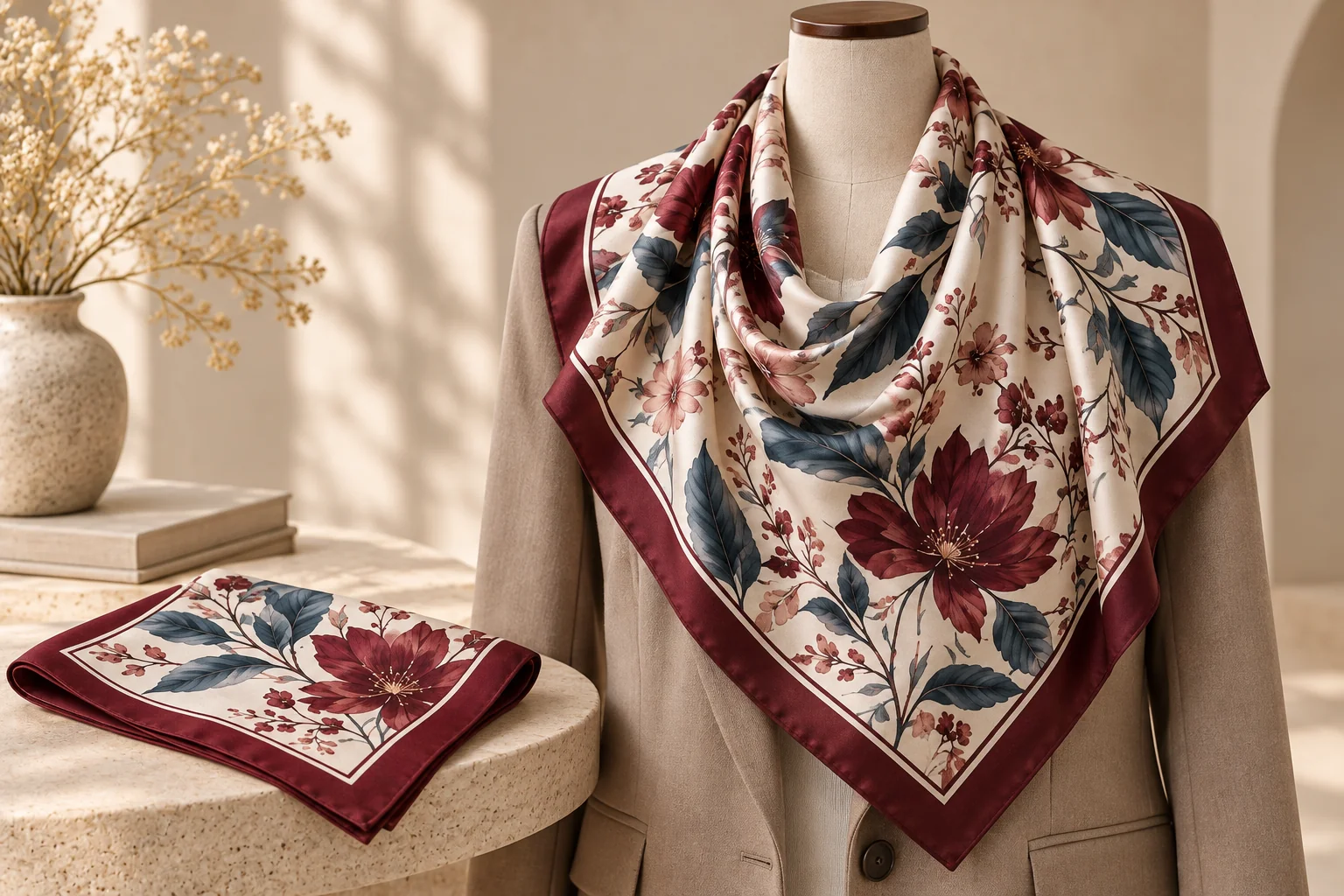
Its corners and edges deserve careful attention. When the scarf is folded into a triangle or rolled into a band, the center may be hidden while the border remains prominent. A border color that frames the artwork in a flat image may also become the most visible feature when worn.
If the design includes a logo, signature or important illustration, check its position in several common folds. Keeping essential details away from the finished edge also gives the hem appropriate space.
3. The Large Square: Give the Artwork Space to Speak
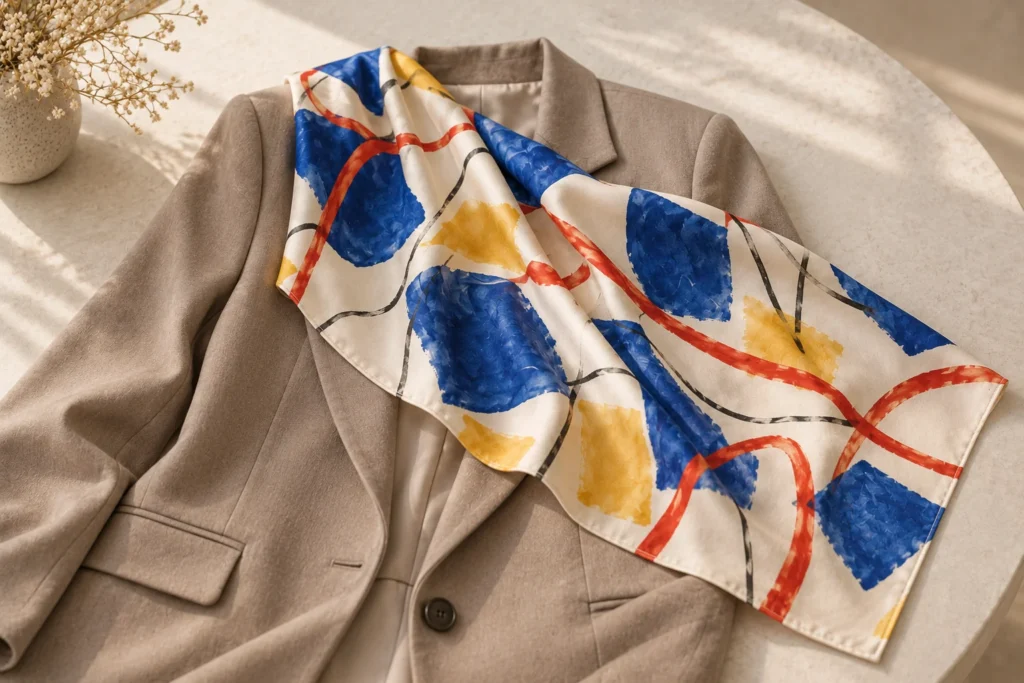
A large square allows more of the original illustration to remain visible. Draped over the shoulders or styled with a blazer, it can become the focal point of an outfit.
That larger surface offers room for a central composition, more detailed artwork and a stronger relationship between the center and the border. Still, a print that looks beautiful when laid flat should also work when the fabric falls into soft folds. Place key motifs where they can be seen in both views.
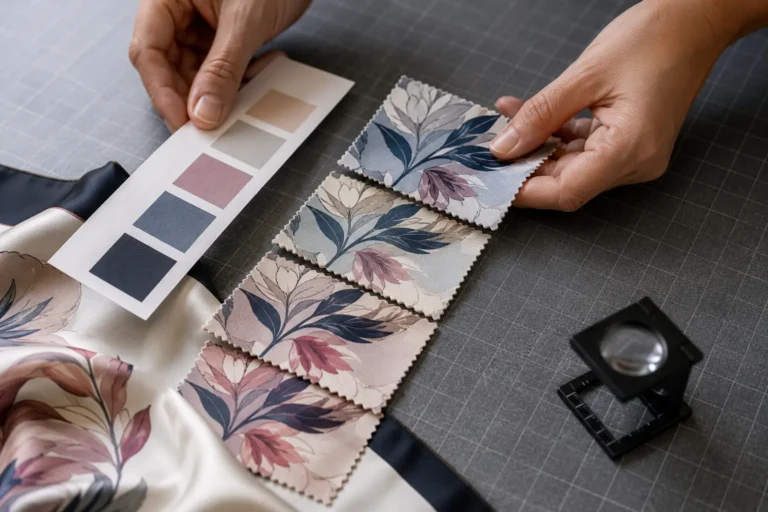
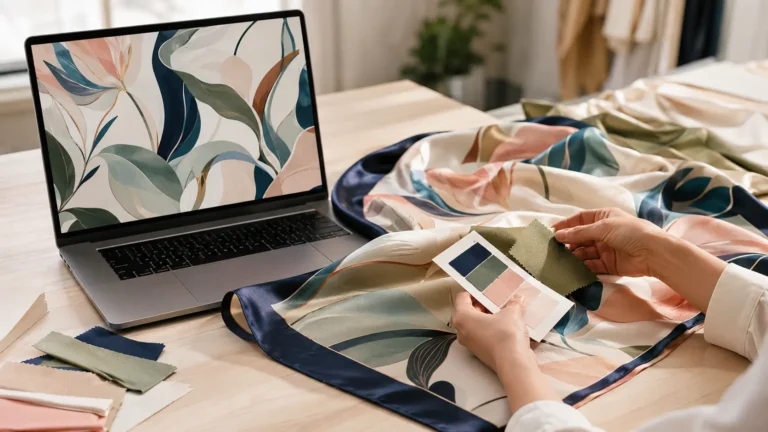
Fabric choice matters here, too. A sample lets you assess how the selected silk feels and drapes at the finished size, as well as how the printed colors appear on the material.
Keep the Collection Consistent Without Repeating the Layout
The three scarves should look like members of the same family, but each needs a layout suited to its shape. To build that connection, keep selected elements consistent:
- A shared color palette
- One or two recurring motifs
- A related border treatment
- A consistent approach to branding and packaging
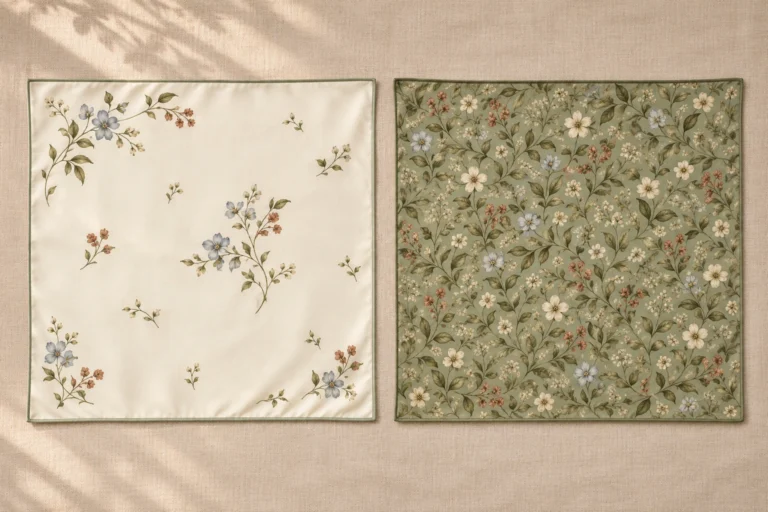
Then adjust the scale, placement and spacing of the artwork for each piece. This gives customers a recognizable collection with three distinct styling options.
Sample the Designs as Finished Scarves
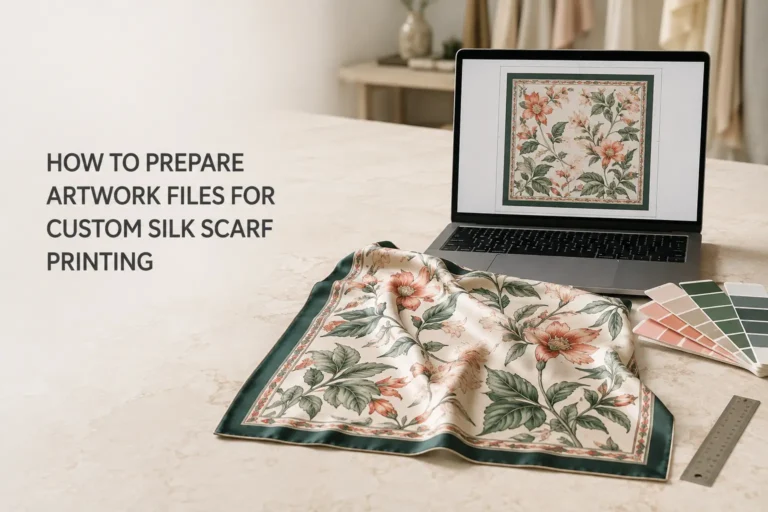
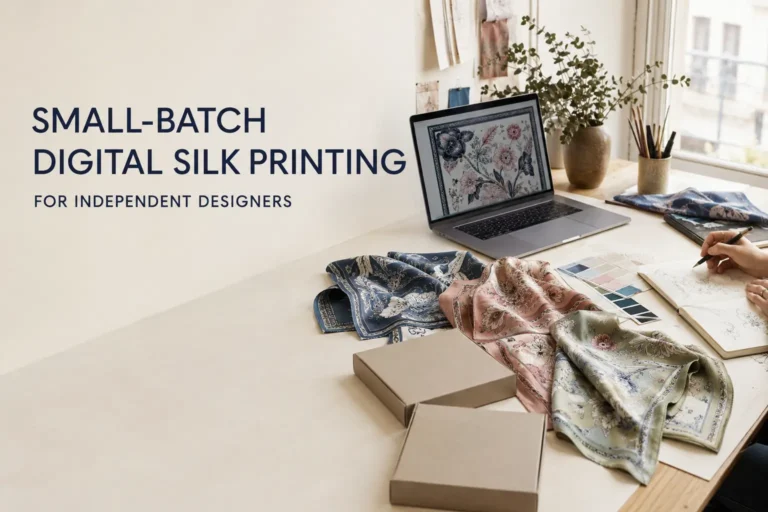
A digital mockup is useful for planning, but a physical sample answers different questions. Is the print clear on the chosen silk? Do the colors look right in natural light? How does the scarf feel when tied or draped? Does the finished edge suit the artwork?
Review each size as a separate product. In particular, check the visible motifs after folding, the placement of the border and the appearance of the reverse side. If those details matter to your collection, it is easier to refine them before bulk production.
Build a Collection Around One Strong Idea
Developing three scarf styles from one print is a practical way to explore a design’s potential. The narrow scarf highlights movement and small details; the small square turns the print into an everyday accessory; the large square gives the artwork a stronger visual presence.
The most successful collection begins with a shared creative idea and treats every format as its own design. With careful artwork placement and sampling, one print can become three scarves that feel connected, wearable and ready for your brand.
Planning a custom silk scarf collection? Apexplor Tex can help you review your artwork, fabric options, scarf sizes and finishing details before sampling.