2026 Silk Scarf Trends: Five Styles Worth Exploring for a Custom Collection
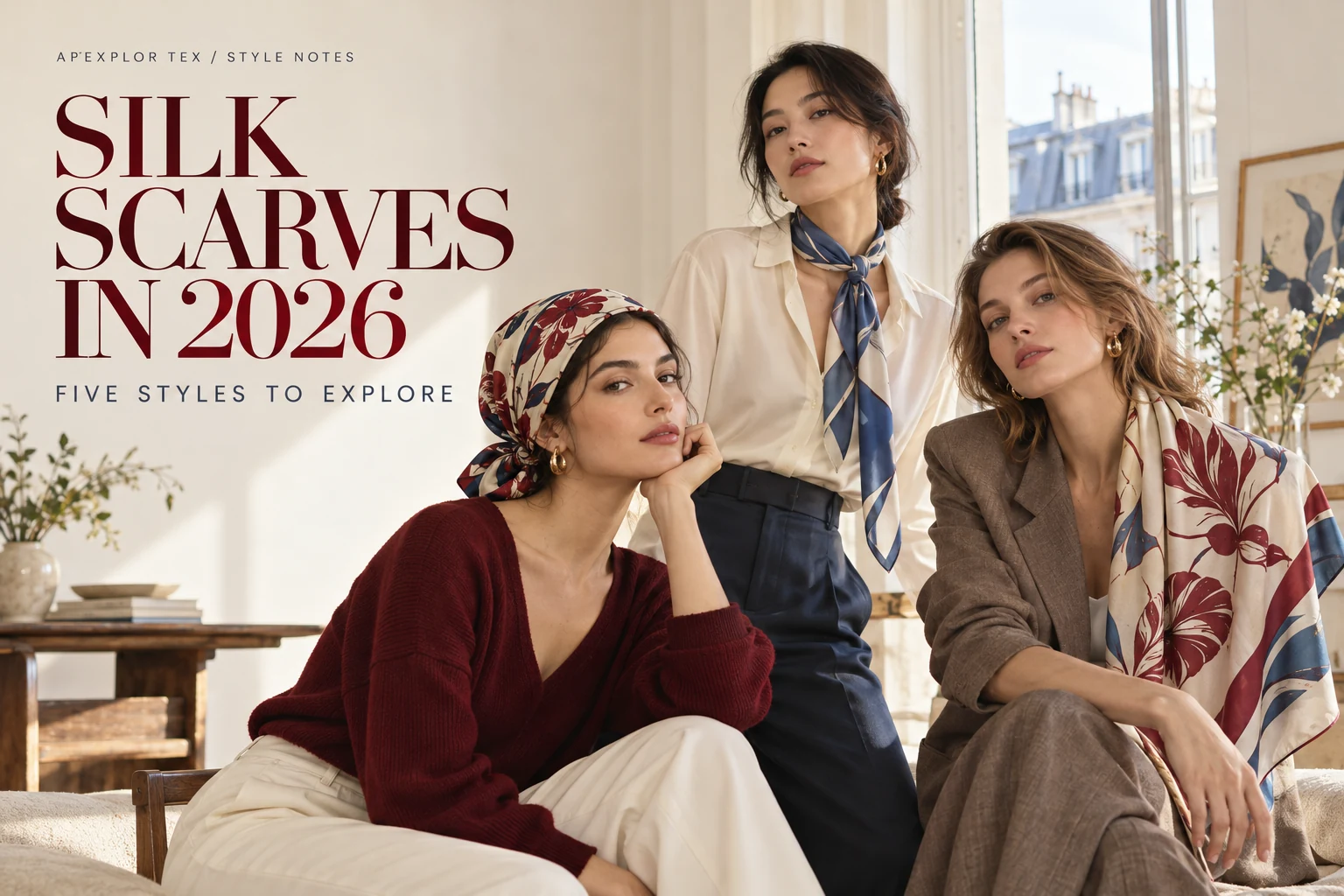
A silk scarf has always been versatile, but 2026 styling gives that versatility a more visible role. On the spring and summer runways, scarves appeared around the head and neck, across jackets and at the waist. The scarf was often more than a finishing touch: it helped define the shape and character of the outfit.
For a brand developing a custom silk scarf collection, this opens up more possibilities than choosing one attractive print. How will the scarf be worn? Which part of the artwork will show after it is folded? Will the same design work across different sizes?
Here are five styles worth exploring and the design questions behind each one.
1. The compact square worn as a headscarf
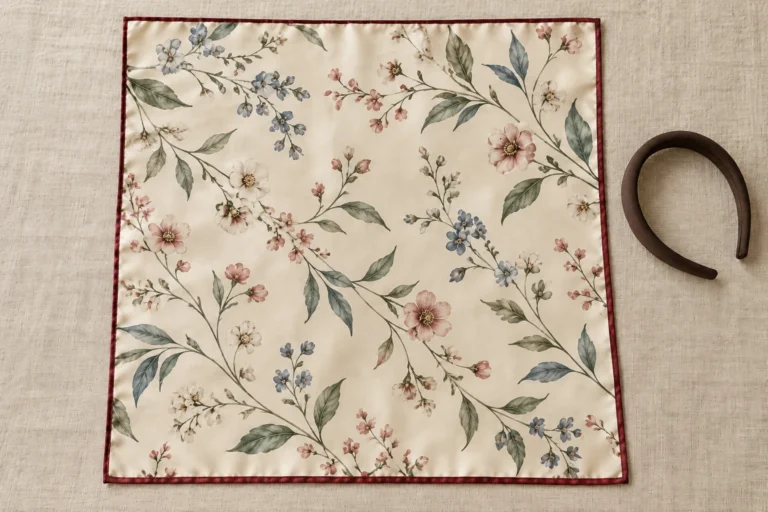
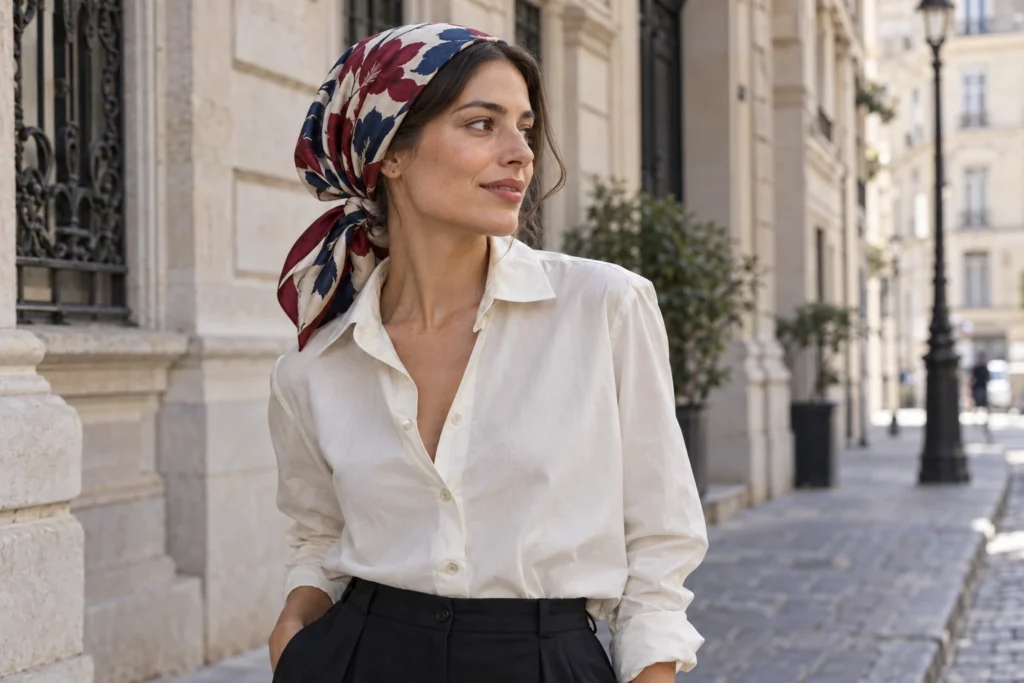
The headscarf is one of the clearest scarf styling directions of 2026. A compact square can be folded into a triangle and tied over the hair, while also working around the neck or on a bag.
For a custom design, the key is to view the artwork as a triangle, not only as a full square. Once folded, the center of the print may disappear and the border may become its most visible feature. A motif that looks balanced when flat can feel uneven when worn over the hair.
Before approving a sample, fold it in the intended way. Check the position of the main motif, the border and any logo. This simple test can reveal whether the design needs adjustment.
2. The narrow scarf that moves between neck, hair and bag
A slim silk scarf offers a different kind of versatility. It can be tied close to the neck, woven into a hairstyle or wrapped around a bag handle. Its smaller visible area makes every design choice more noticeable.
Long, narrow layouts often benefit from a clear rhythm in the pattern. Consider what appears at the two ends when the scarf is tied and whether the colors still work when several layers overlap. If a logo or signature is part of the design, place it where it has a chance to remain visible during wear.
This format can also give an existing collection a smaller companion piece, provided the artwork is adapted to its proportions rather than simply squeezed into a narrow shape.
3. The silk scarf worn at the waist
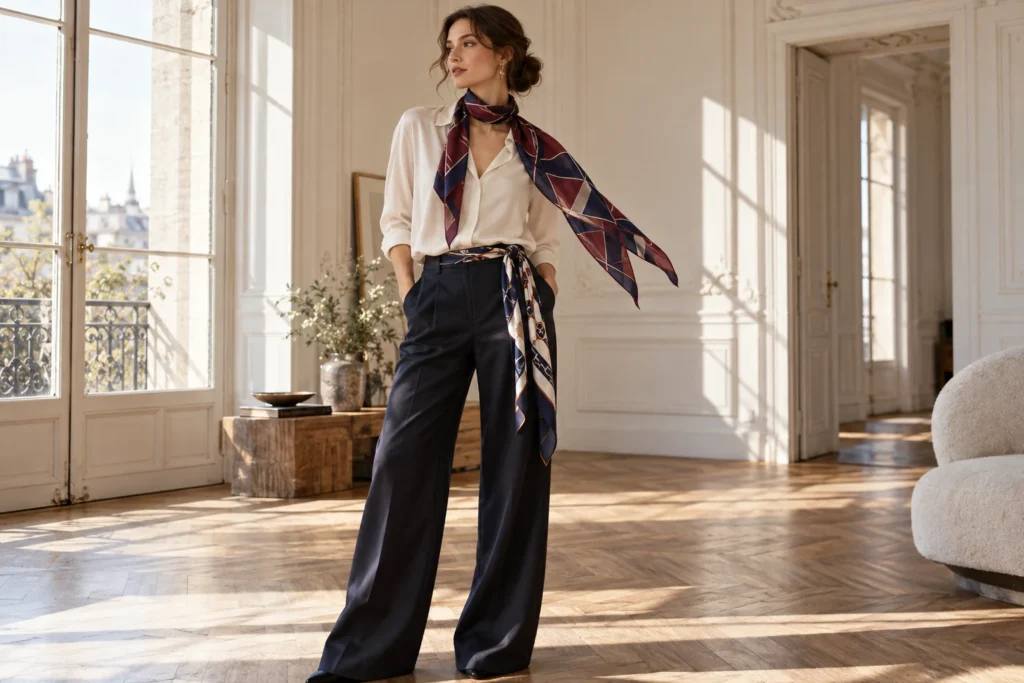
Runway styling has shown scarves used in place of belts or draped from the waist. The effect depends on both the fabric’s movement and the position of the print.
A waist scarf needs enough length for the intended knot and hanging ends. The artwork should also be tested while tied: a centerpiece placed in the middle of a flat design may be hidden by the knot, while the ends become the strongest visual element.
For a custom project, it helps to decide whether the scarf should create a subtle accent or a more dramatic line against the outfit. That choice will guide its size, color contrast and pattern scale.
4. The larger square used as a statement layer
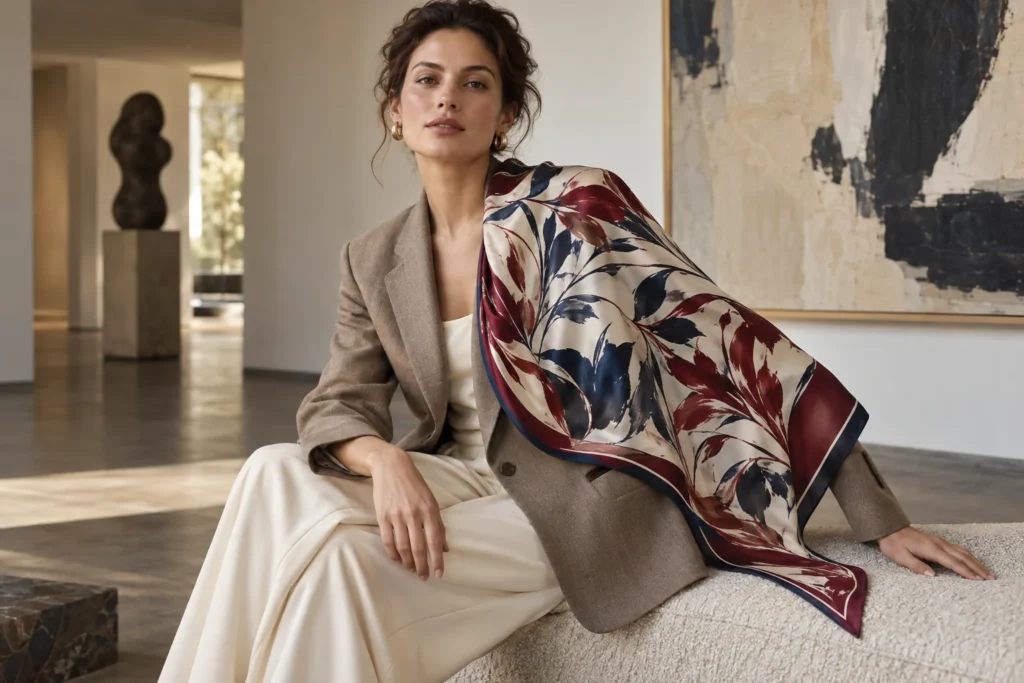
A generous square can be draped over the shoulders, layered with a jacket or styled more boldly as part of an outfit. It gives an artist or brand more space to tell a visual story through the print.
That larger canvas still needs a wearing test. When the scarf is draped, only selected sections of the artwork remain visible. Large motifs may create a striking effect, while smaller repeats can give the piece a more consistent appearance from different angles.
Consider photographing the sample flat, folded and worn. Together, those views show how the design performs as an object and as an accessory.
5. The expressive printed square
There is still room for the classic printed silk square. In 2026, its appeal lies in how personally it can be styled: as a neck scarf one day, a headscarf or a bag accent the next.
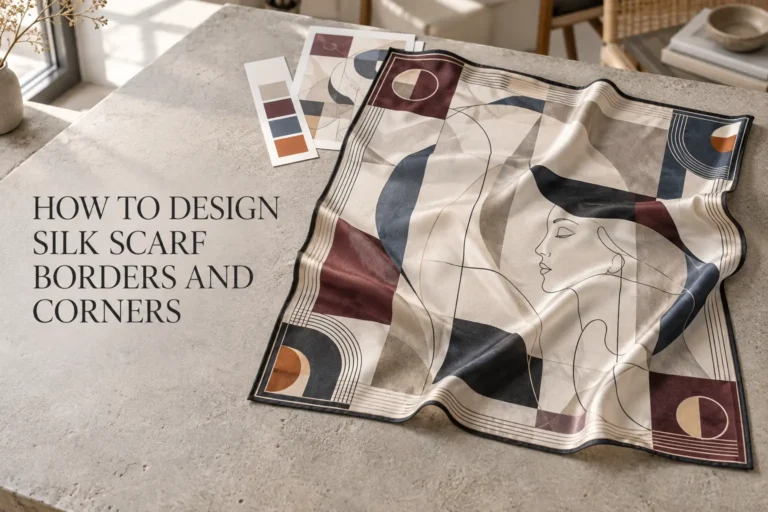
For brands, an expressive print does not have to mean filling every centimeter with detail. A strong color combination, distinctive border or well-placed focal motif can give the scarf an identity of its own. The goal is a design that is interesting when open and still recognizable when folded.
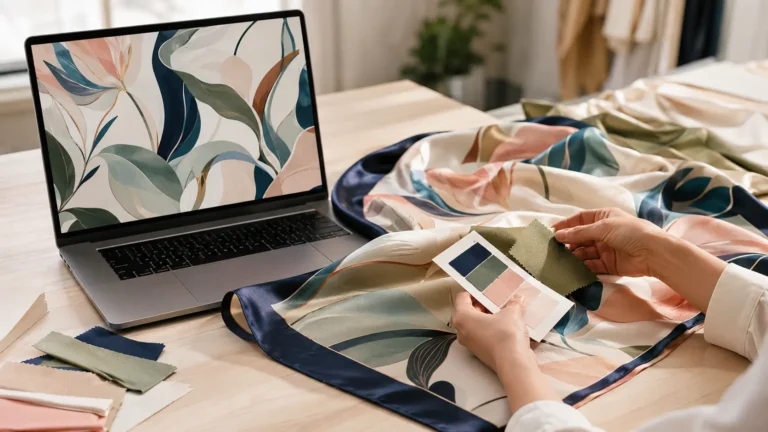
Sampling is particularly helpful when the print includes fine lines or specific colors. Reviewing the artwork on the chosen silk lets you assess the actual color, detail and drape before moving ahead.
Design for the way the scarf will be seen
These five styles share one practical lesson: a scarf is rarely viewed only as a flat square or rectangle. It is folded, tied, draped and seen from different sides. The most effective custom designs account for those changes from the start.
If you are planning a 2026 silk scarf collection, begin with the intended wearing style. Then choose a suitable format, prepare the artwork for that shape and review a physical sample in use.
At Apexplor Tex, we work with custom silk designs starting from one piece. Send us your artwork, preferred size and how you envision the scarf being worn, and we can review the project details with you.