How to Choose the Right Size for a Custom Silk Scarf Collection
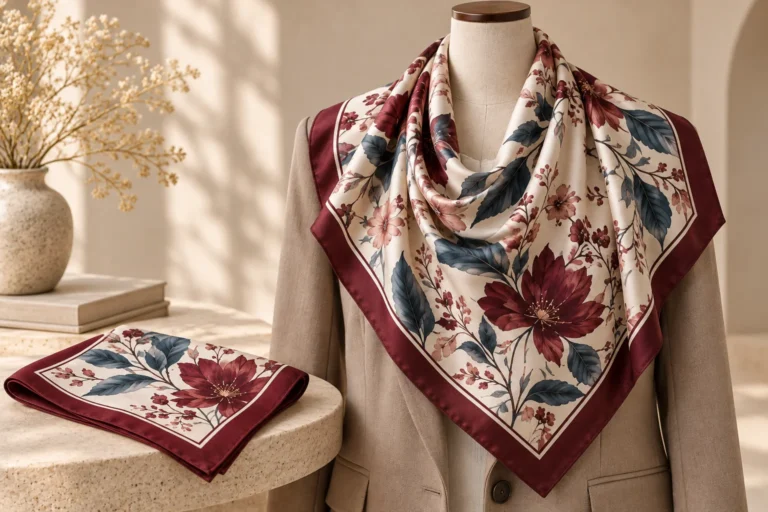
Choosing the size of a silk scarf affects far more than its final dimensions. Size influences how the scarf can be worn, how much artwork remains visible after folding, which silk feels appropriate, how the border is constructed and how the product is positioned. The best choice should support the intended customer, styling method, artwork and price level.
Why Scarf Size Matters
A scarf is rarely viewed only as a flat square. Customers fold, knot, wrap and drape it, so the design must work both as a complete composition and as smaller visible sections. Fine details can disappear on a small scarf, while a large scarf needs enough visual structure to remain interesting across a wider area.
Size also changes the product’s function. A compact square may be worn around the neck, wrist or handbag, while a larger square can become a headscarf, shoulder accessory or statement piece. The right choice begins with how the customer is expected to use it.
45 × 45 cm: Compact and Easy to Style
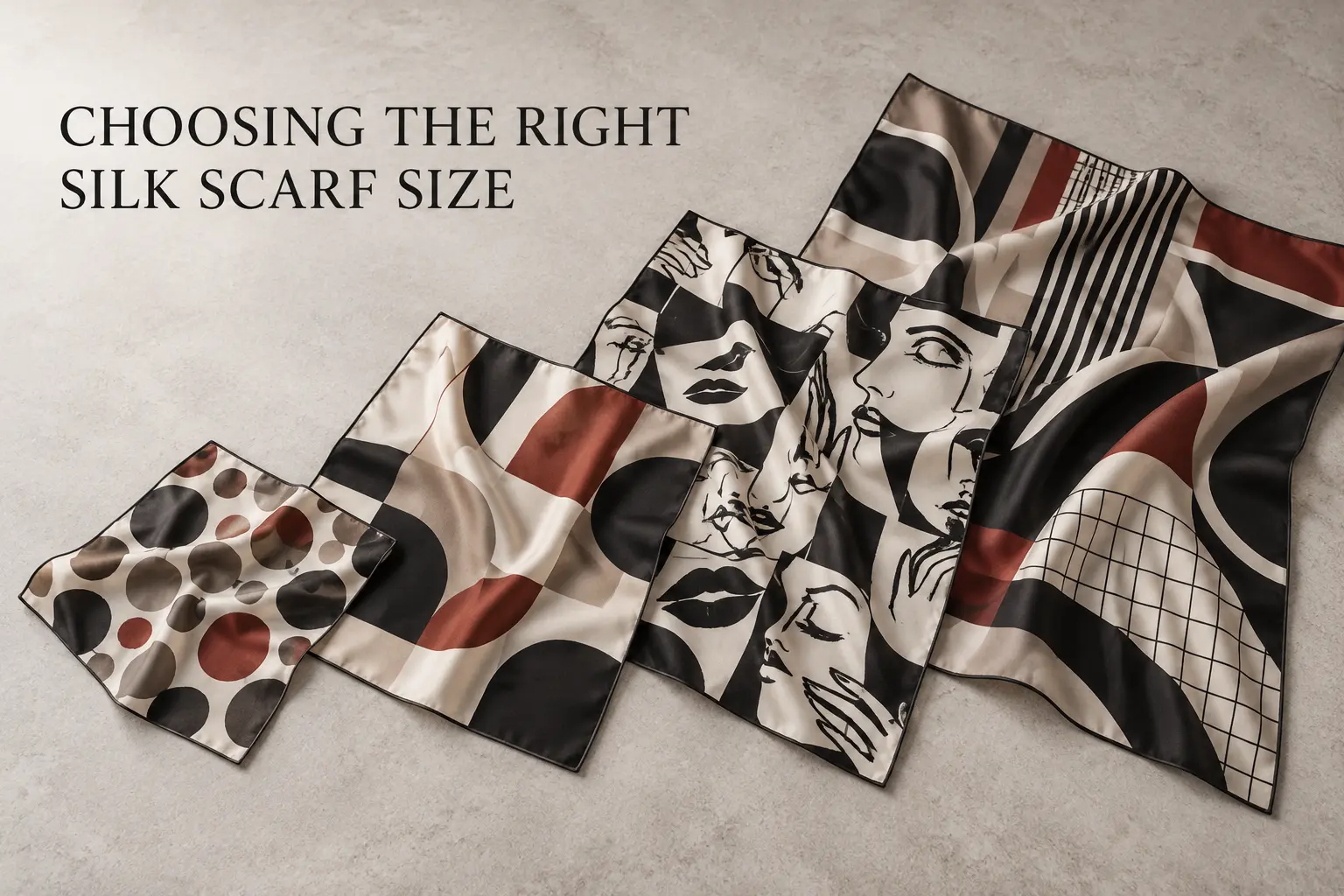
A square of approximately 45 × 45 cm is often chosen for small neck scarves, wrist accessories, pocket styling or handbag decoration. Its compact size makes it suitable for gift products, entry-level collections and designs intended to add a small accent of colour.
Because the printable area is limited, the artwork should be clear and well organised. Large motifs and strong colour relationships usually remain more visible than very fine illustrations. Borders should not occupy most of the scarf after folding, and corner details need particular attention.
53–55 cm: A Little More Presence
Scarves around 53–55 cm provide more styling flexibility while remaining compact. They can be tied around the neck with a softer drape, used as a head or hair accessory, or added to a handbag.
The additional space allows more detail than a 45 cm square without moving into the scale of a large scarf. When adapting a smaller design, review the border, corner motifs and central composition instead of simply enlarging every element.
65–70 cm: A Versatile Mid-Size Option
Squares between approximately 65 and 70 cm offer a useful balance between wearability and design space. They can be folded into a neck scarf, worn over the hair or styled as a more visible fashion accessory.
This size provides enough room for original illustration, layered motifs and decorative borders without feeling as substantial as a classic 90 cm scarf. The full design should look complete when opened, while individual corners and folded sections should still contain recognisable colours or motifs.
90 × 90 cm: The Classic Statement Square
A 90 × 90 cm scarf is widely associated with the classic large silk square. It provides generous space for detailed placement artwork, strong borders, illustrated scenes and more complex visual storytelling.
It can be worn around the neck, shoulders or head, and the larger surface displays the silk’s lustre and movement. However, it requires more than a larger digital canvas. Designers should consider focal areas, colour distribution and the relationship between the centre, border and corners. It also uses more fabric and requires longer finished edges, affecting production cost.
Narrow and Rectangular Scarves
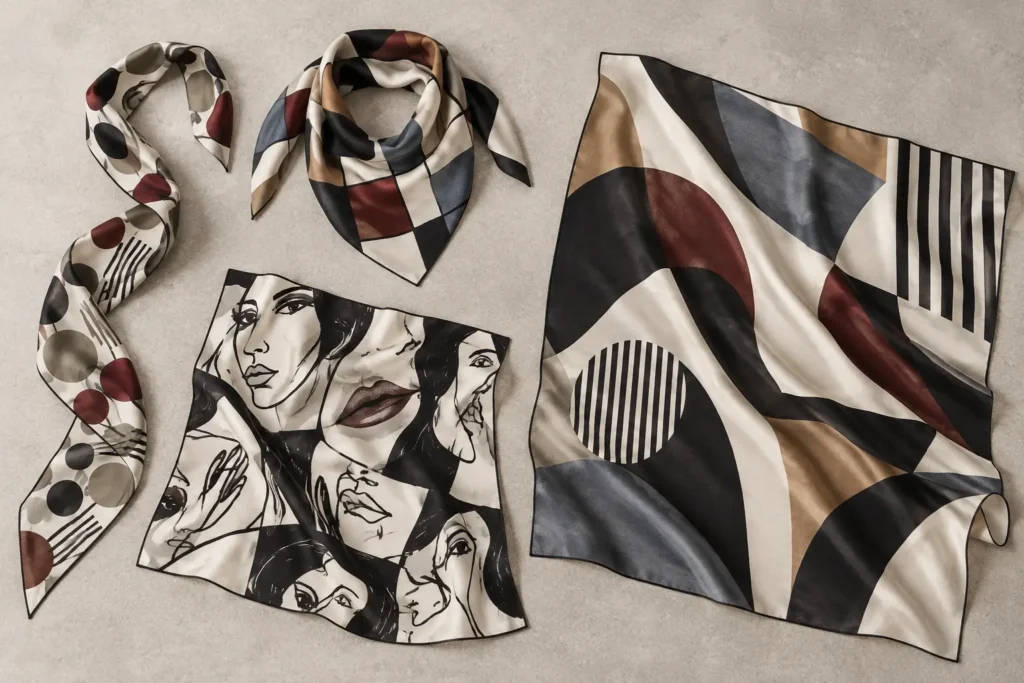
Not every collection needs to be based on square scarves. Narrow styles, often called twillies or skinny scarves, can be worn around the neck, wrist, hair or handbag handle. Longer rectangular scarves provide more coverage and a different drape.
These formats require artwork designed specifically for their proportions. A square composition usually cannot be cropped into a narrow strip without losing important elements. Direction also matters because both ends may be visible when the scarf is tied, so end motifs and logo placement should be reviewed in likely worn positions.
Match the Artwork to the Size
One artwork should not automatically be used for several scarf sizes without adjustment. Although the overall image can be scaled, line thickness, border width, text size and motif placement may no longer suit the new dimensions.
A detailed 90 cm composition may become crowded on a 45 cm scarf. In the opposite direction, a simple small-square design may appear empty when enlarged. Creating size-specific versions helps protect the original visual idea.
View the design at its approximate physical size and digitally fold it into common styling shapes to check which colours and motifs remain visible.
Consider Silk Type, Weight and Drape
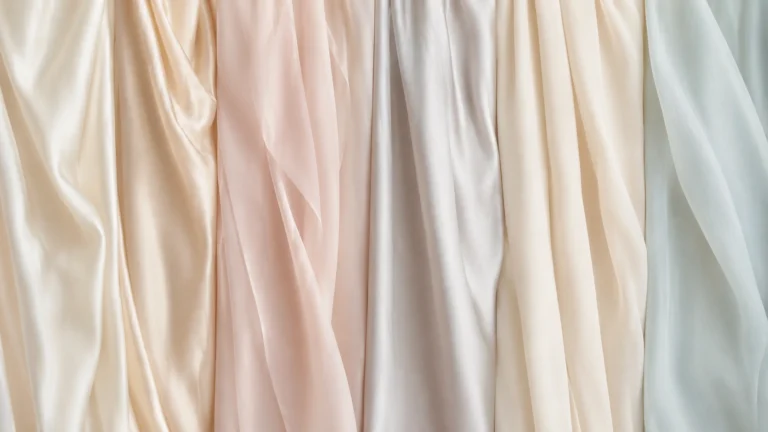
The same dimensions can feel very different when produced in different silks. Silk twill has a more structured character and can support defined shapes and crisp folds. Habotai is light and fluid, while satin provides a smoother surface and stronger lustre. Chiffon creates a more transparent and airy result.
Scarf size and fabric should therefore be selected together. A light silk on a large format may feel delicate and flowing, while a heavier fabric creates more body but also more volume around the neck.
Reverse-side colour visibility should also be considered. Both sides are frequently visible when a scarf is folded or tied, especially on larger or more fluid styles.
Confirm Cut Size and Finished Size
Before preparing the final artwork, ask whether the dimensions refer to the cut fabric or the finished scarf after hemming. Part of the printed edge may be rolled, folded or stitched.
Hand-rolled and machine-stitched hems do not create exactly the same edge profile. The required allowance may also vary with fabric, scarf size and production method. Important text, signatures, faces and decorative details should be kept within a safe area provided by the manufacturer.
Borders require particular care. Small cutting and hemming tolerances become more noticeable when the border is very narrow or contains precise parallel lines.
Balance Size, Cost and Product Positioning
Larger does not always mean better. A small scarf can feel refined and collectible when its dimensions support the artwork and intended use. A larger scarf can justify a higher retail position, but it also increases fabric, printing, finishing and packaging requirements.
For a first collection, offering too many sizes can divide the production budget and complicate inventory. One carefully selected core size, or a small and large option with clearly different purposes, may be easier to test.
Sample the Intended Size Before Production
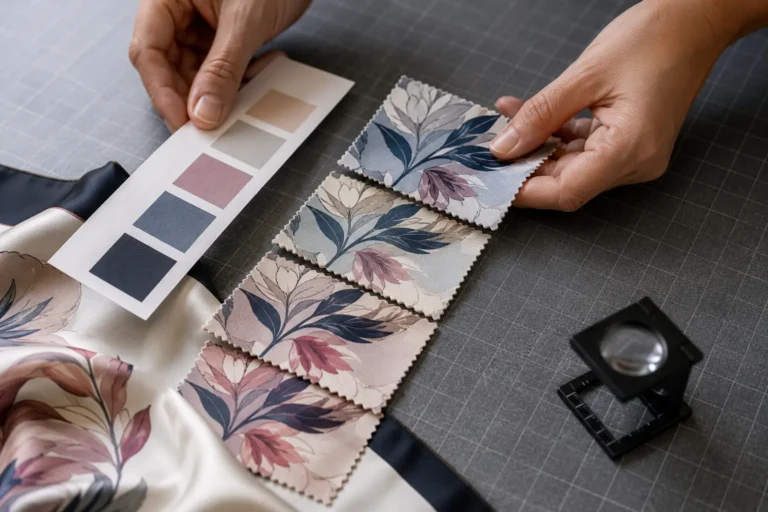
A sample allows the designer to evaluate more than print colour. It shows whether the scarf feels comfortable when tied, whether the artwork remains balanced after hemming and whether the fabric weight suits the dimensions.
Fold and photograph the sample in realistic styling positions, checking how the border, corners and focal motifs appear. If changes are needed, update the artwork for that specific size before approving bulk production.
The right scarf size brings together design, function and customer expectations. Instead of selecting dimensions only because they are common, begin with how the product should be worn and what role it will play in the collection.
If you are developing a custom silk scarf, send us your artwork, preferred dimensions, fabric ideas and estimated quantity. The China Silk Scarf team can help you review suitable printing, sampling and finishing options before production.