Single-Sided or Double-Sided Printing for Silk Satin Scarves: What Should You Check in a Sample?
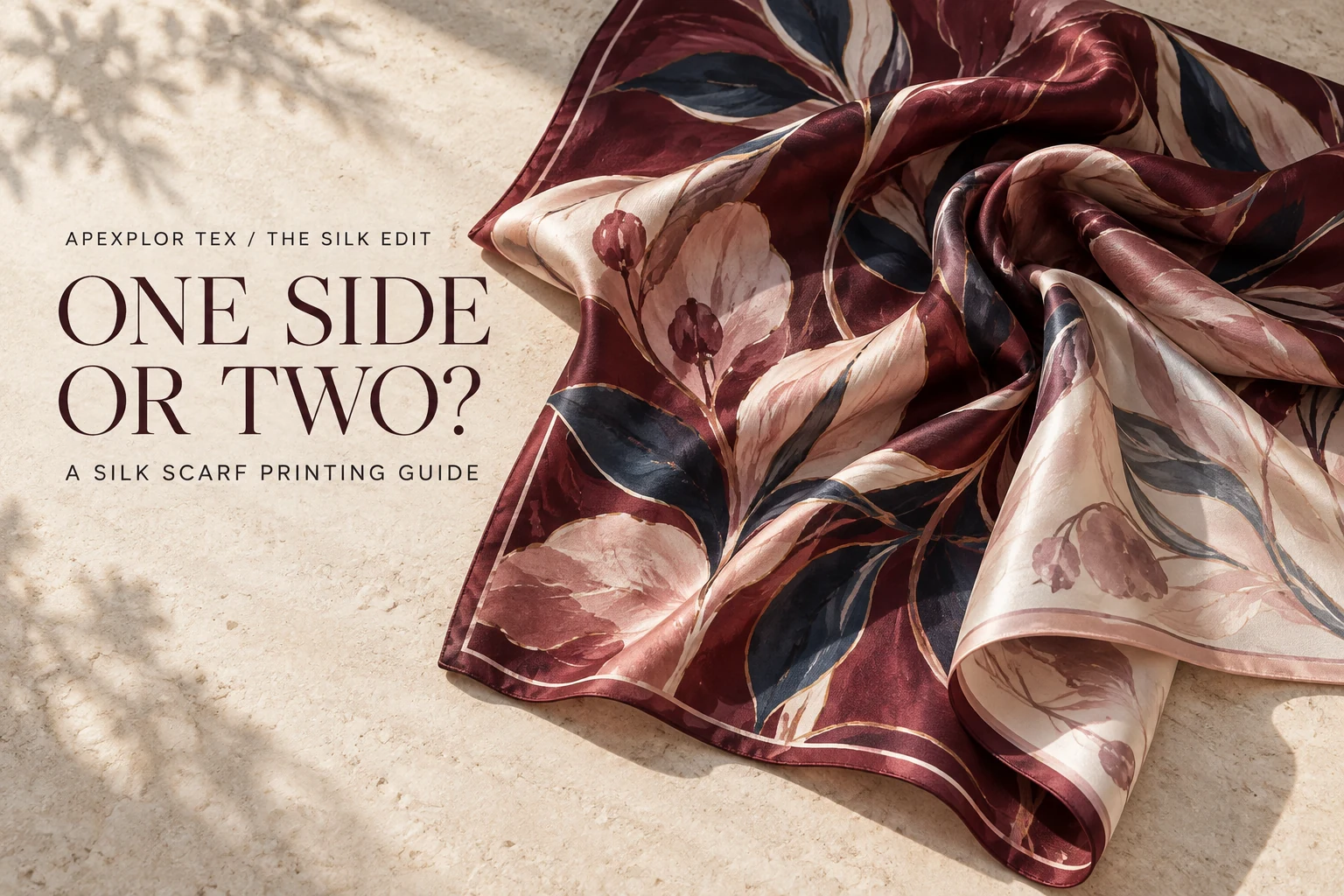
A scarf design may look beautiful when laid flat with the printed side facing up. Once the scarf is tied or draped, however, parts of the reverse side become visible. That is why buyers often ask whether single-sided printing will give them the appearance they want—or whether they should choose double-sided printing.
There is no answer based on the artwork alone. The silk fabric, colors, pattern and intended way of wearing the scarf all affect that decision. A sample made on the intended fabric gives you a much clearer basis for choosing.
What does the reverse of a single-sided print look like?
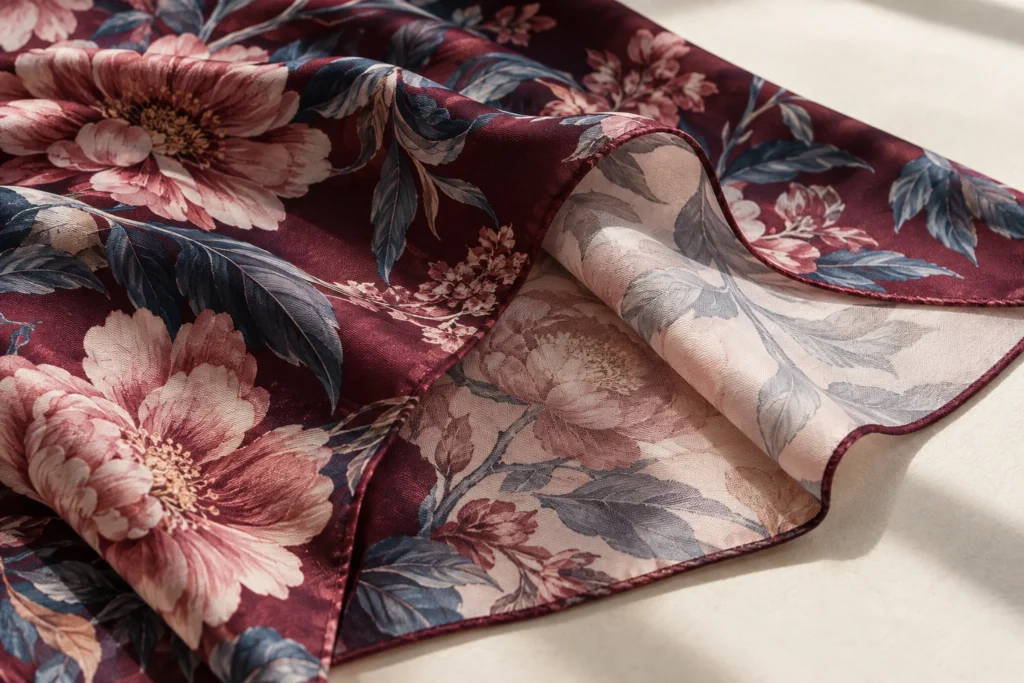
With single-sided printing, the design is printed on one face of the fabric. Some color may be visible from the reverse, but it should not be assumed to look identical to the front. The difference can be more noticeable in certain colors or areas of the design.
The fabric also matters. A lightweight silk and a more substantial silk satin will not necessarily show the same reverse-side appearance. Even if you have seen another printed scarf, it may not be a reliable guide to how your artwork will look on your chosen fabric.
For this reason, ask to review a print sample using the fabric and artwork you plan to order.
Look at the scarf the way it will actually be worn
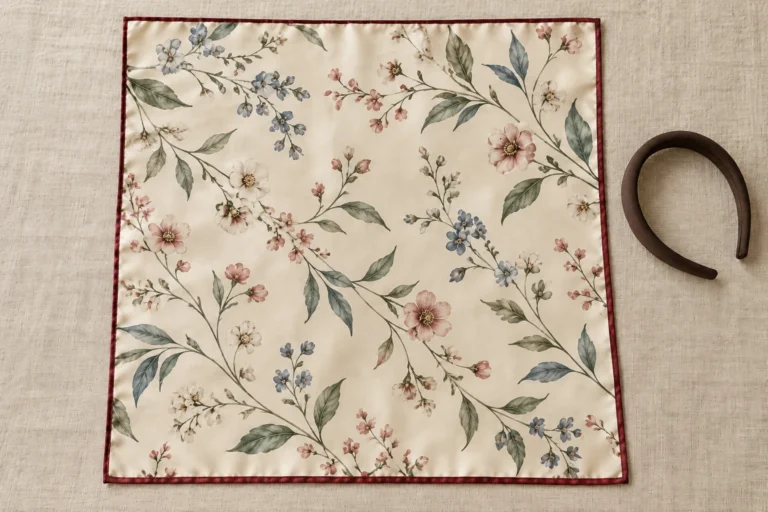
Start by viewing the sample flat so you can examine print clarity and color on the front. Then turn it over and compare the same areas on the reverse.
Next, fold, tie or drape it. A square scarf worn around the neck may reveal both faces in its folds. If the scarf is intended for a performance or display, movement may expose the reverse even more often.
Ask yourself: does the difference between the two sides work with the design? For some projects, a lighter reverse is acceptable. For others, it changes the visual effect the designer intended. That judgment is easier to make with the finished sample in hand.
Check more than color
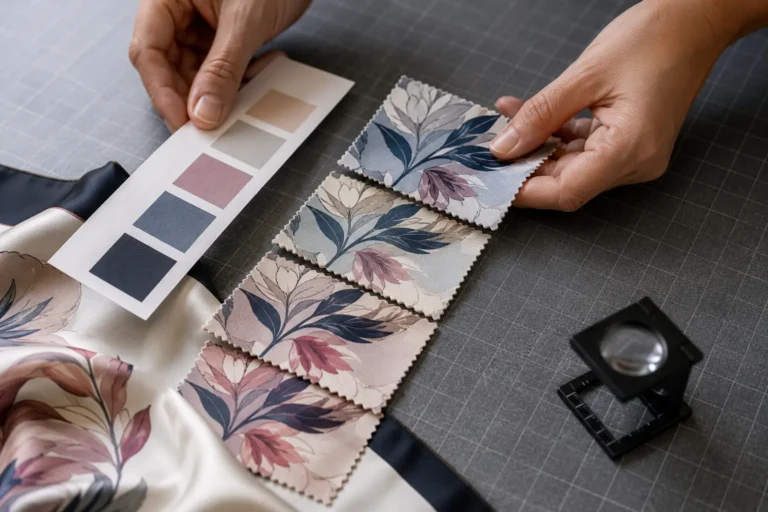
The sample is also an opportunity to assess the silk itself. Handle the scarf and consider its softness, weight and drape. Look closely at fine lines, text and small details in the print. Check whether the border still looks balanced after the edges are finished.
If a particular color is essential, compare the physical sample with your approved reference under consistent lighting. A screen preview can help confirm the layout, but it cannot show the exact appearance or feel of printed silk.
A useful sample review covers four points:
- Front: Are the colors and details suitable for the design?
- Reverse: Is its appearance acceptable when visible?
- Wear: How do both sides look when the scarf is folded, tied or draped?
- Finish: Do the fabric feel and edges suit the intended product?
When should you consider double-sided printing?
If the reverse is frequently visible and its lighter appearance takes away from the design, ask about double-sided printing. It may be suitable for a scarf where a strong visual effect on both faces is important.
Discuss the intended fabric and artwork with the production team before making that choice. The printing approach, feasibility, sample result and price should all be confirmed for the specific project. Double-sided printing should be selected because it improves the finished scarf for its intended use, rather than simply because it sounds more premium.
Let the sample guide the decision
If you are uncertain, making a single-sided sample first can be a practical step. You can assess the front print, reverse appearance, drape and overall feel before deciding whether to proceed with that specification or explore a double-sided option.
At Apexplor Tex, we accept custom silk scarf projects starting from one piece. Send us your artwork, desired dimensions, preferred fabric and intended use. We can review the production requirements with you before sampling.